Wednesday, January 18, 2023

Formtech True View R30 Radar Overview


fortemtech.com

TrueView® R30 Radar


Accurate 3D Detection

Track objects in full 3D with extreme precision. Able to resolve objects just meters apart, even at slow speeds.

Ideal SWaP-C

All TrueView® radar products are compact, lightweight, and require minimal power (as little as 38 watts for R20 models).

Wide Area Protection

Excellent beam width, angle, and range. Combine four TrueView® radars to achieve total 360° coverage.

Ready for Sensor Integration

Pair with a TrueView® camera unit to benefit from radar-guided pan, tilt, zoom, and focus for real-time visual tracking.

Low, Slow, Small — See It All

Detect and track the small, low-flying, slow-moving (less than 0.1 m/s) drones that other radars struggle to follow.

Easy to Set Up and Operate

Rapid setup for permanent or portable applications, optimized for reliable cueing of other sensors or mitigation systems.

Low False Alarms

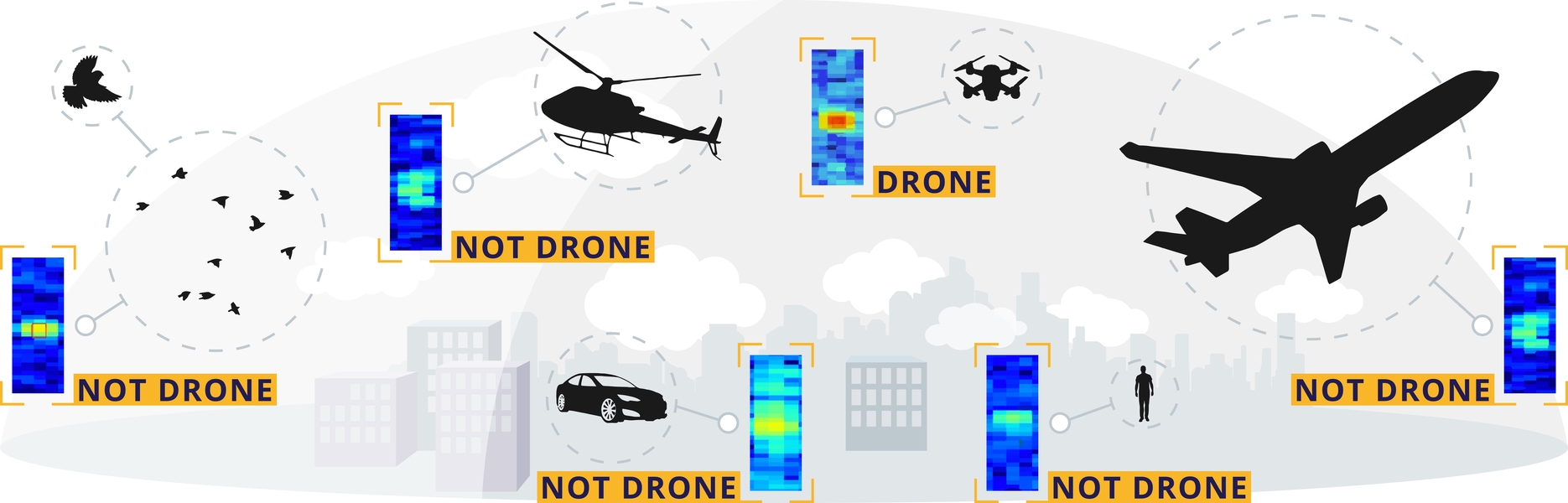
While other radars are plagued by false alarms often triggered by birds, TrueView® radars harness AI-powered microdoppler classification to alert only on objects of interest, tuning out distractions.

STAP-Enabled

Environmentally aware filtering and advanced space-time adaptive processing (STAP) algorithms allow TrueView® radars to excel in cluttered metropolitan areas, even when positioned close to the ground.

Drone detection turned up to eleven
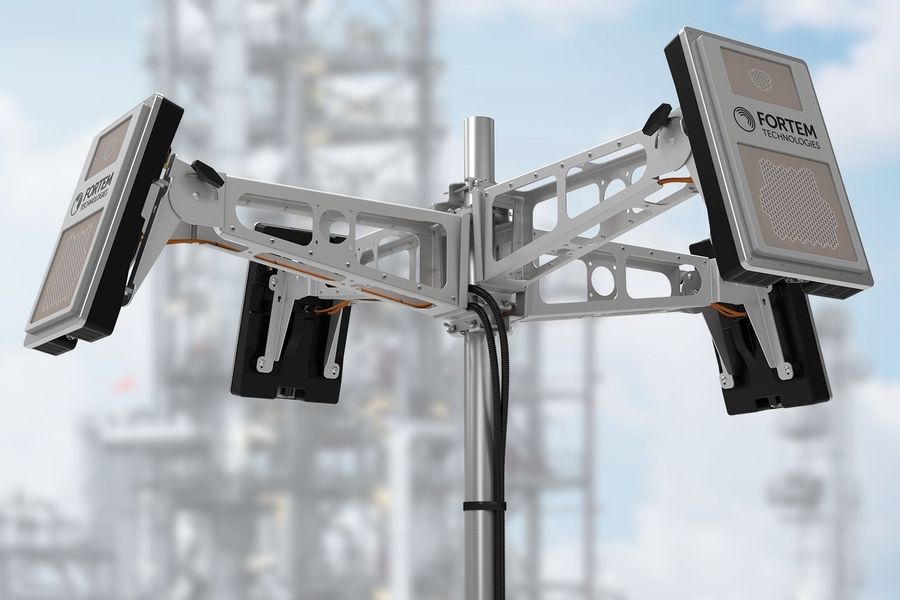
The R30 is a symbol of a well-protected airspace. It is a high-performance, true AESA (Active Electronically Scanned Phased Array) radar with 256 receive elements, 16 digital channels, multi-channel digital beamforming, simultaneous analog beam steering, and outstanding antenna efficiency.

Its hardware specs alone make the R30 one of the industry's top contenders. But TrueView® radars have a major advantage over alternatives — AI at the Edge. Featuring an onboard graphics processor (GPU), the R30 analyzes contacts in real-time to deliver intel that is far more accurate and complete than anything competing radars can manage.

Scalability is another important benefit. The R30's ability to network with other TrueView® radar units allows for total 360° coverage of large-scale zones, even in metropolitan areas with tall buildings.

TrueView® Radar: Airspace awareness ahead of the curve

Fortem's TrueView® radar family leads the pack in the low-SWaP AESA radar segment. It is also the only radar brand applying the latest advancements to improve drone defense. Powered by blazing-fast NVIDIA™ graphics processors (GPUs), TrueView® radars go beyond simple detection, harnessing artificial intelligence to track and classify objects with extreme accuracy.

The AI relies on more than 10 years of machine learning wisdom to deliver the cleanest categorization on the market, bar none. And all of this happens onboard the radar itself — AI at the Edge — ensuring that information sent back to command is both prompt and detailed.
Purpose-built for drone detection

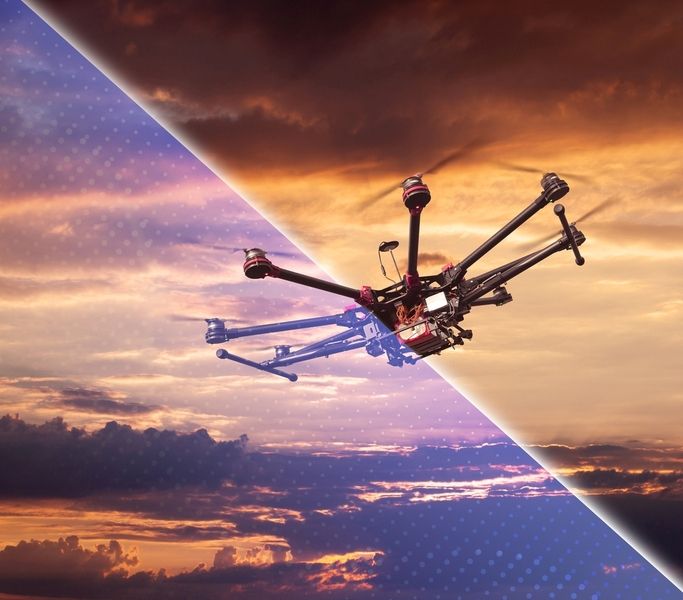
Traditional radar systems are meant to detect large threats, like enemy aircraft, or fast-moving threats, like guided missiles, approaching from a distance. They are not suited for countering the multitude of Group 1 and Group 2 drones causing trouble today.

Aside from being smaller than yesterday's threats, drones can fly much slower and at much lower altitudes. They are also very nimble, able to slip between gaps in defenses with surgical precision. Above all, drones are a new problem that demands new answers, not old ones.

Fortem's answer is TrueView®, a new breed of radars created specifically for anti-drone purposes.

Guaranteed low SWaP-C

SWaP-C is a military acronym. “SWaP” stands for Size, Weight, and Power, while “-C” stands for Cost, which is measured against the first three qualities. Today's defense organizations value versatility in military hardware. In contrast to the large, costly radar emplacements of the past, they now prefer small, efficient devices that are still powerful, but also flexible and portable.

It's a smart philosophy, which is why it has always been Fortem's top priority. All TrueView® radar products are, from conception to production, engineered for optimum SWaP-C. Both the R30 and its even smaller counterpart, the R20, are small enough to be carried and weigh less than 7 kg (15.5 lbs). They are also incredibly efficient — at full load, an R20 consumes just 38 watts. That's about the same as a household lightbulb.

360 degrees of certainty

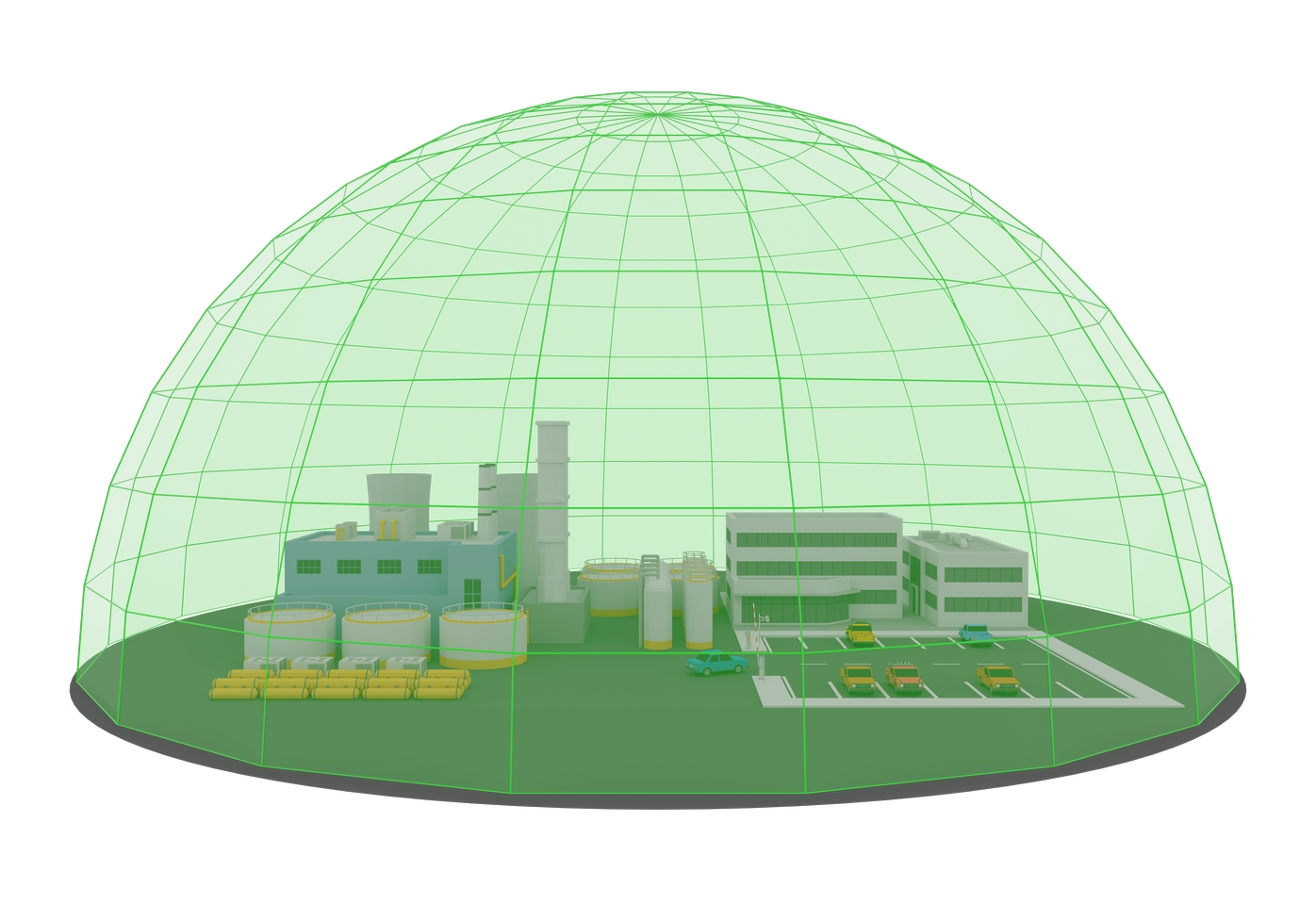
Many radar systems — even modern ones — suffer from blind spots that can potentially be exploited. Criminals and terrorists are able to breach these inadequate defenses with high-flying drones that evade their detection, or with low-flying drones that enter underneath it. By contrast, TrueView® radars offer actual 360° coverage of an airspace via superior 3D detection of targets and the ability to link multiple units to form an impenetrable mesh.
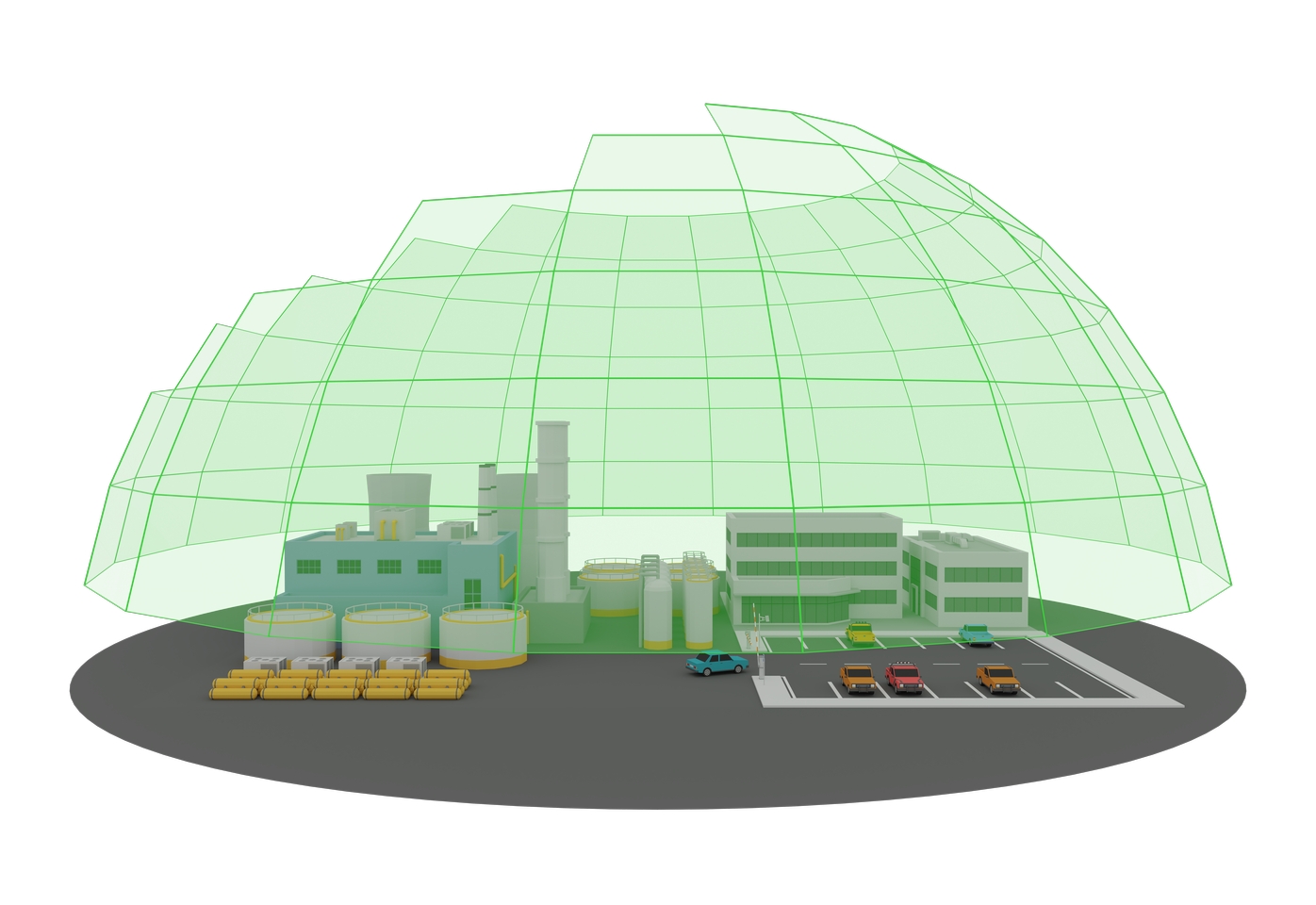
Other Radars
TrueView® Radars

AI at the Edge

TrueView® is much more than radar that can detect drones. Just as the problem of drones can't be explained in simple terms, simply being able to detect them does not sufficiently solve it.

Mainly, this is because of false alarms, which are common with other drone-capable radars. Birds are often mistaken for drones, leading to unnecessary panic. The opposite is also possible, and could have devastating consequences. For those tasked with defending sensitive airspaces from drone invasion, neither failure is acceptable.

TrueView® radars eliminate this shortcoming by doing intensive compute work inside the radar itself, utilizing highly advanced AI software. A convolutional neural network (CNN) applies adaptive machine learning combined with dynamic analysis to expose anomalies. It gives reliable, precise classificatons regardless of factors known to interfere with other radars, such as the presence of buildings or harsh weather conditions. Objects are assessed using their micro-doppler radar signatures, pattern of movement, size, position, and velocity. Multiple objects can be assessed simultaneously.
Unrivaled scalability

Because TrueView® radars can be linked directly to one another, there's no practical limit to the size of a TrueView® detection grid.

In fact, the R20 and R30 are designed for installation at both small and very large scales. AI at the Edge makes them extremely well suited to cover large geographical areas, since distance from the command and control center doesn't impact their ability to quickly register drones.

Any type of airspace can be protected, including urban areas with densely packed buildings.

Thursday, January 5, 2023

Arbe Reveals 360-Degree Radar for Self-Driving Vehicles at CES 2023 – IoT World Today


Arbe’s 360° Radar-Based Perception, delivering a complete and integrated understanding of the driving environment.

Arbe Reveals 360-Degree Radar for Self-Driving Vehicles at CES 2023 – IoT World Today: Israeli company Arbe has showcased its latest solution for autonomous vehicles (AVs) at CES in Las Vegas. The Tel Aviv-based firm has revealed its 360° Radar-Based Perception tool, which it says raises the bar for self-driving vehicles. Until now, 360-degree tracking has tended to rely on imaging. But Arbe’s tech uses a suite of radars to provide what it claims is the first artificial intelligence-based integrated analysis of the entire surroundings of a vehicle. The radars can identify, classify and monitor objects, and the data they capture is processed in real-time to create a full free space map around the vehicle, as well as provide analysis of potential hazards.


Jump-starting the Radar Revolution

Phoenix Perception Radar, with its 2K ultra-high resolution, enables an unmatched level of safety, and enriches perception algorithms for advanced capabilities including Free Space Mapping, object tracking, and SLAM. No matter the speed, elevation, range, or surrounding weather and lighting conditions, Phoenix differentiates true threats from false alarms to ensure a safe road ahead for drivers, pedestrians, and other vulnerable road users.


The Industry’s First Surround Imaging Radar

Designed primarily for corner and back installation, Lynx complements Phoenix Perception Radar to deliver a 360 degree view around the vehicle. Lynx offers a full set of benefits at an affordable price– true long-range performance, high resolution, small form factor, and a very wide field of view.
It effortlessly outperforms the current industry 3*4 corner radars and even the leading 12*16 long-range radars on the market, providing perception and superior imaging that are critical for true safety and autonomous driving.

Sunday, January 1, 2023

Top 10 drone innovations that caught our attention in 2022


Top 10 drone innovations that caught our attention in 2022

The past year has been a big one for drones, both in terms of new models and new capabilities. Here's a list of our picks for the latter, including clever uses of drones and interesting developments in the technology.

Honorable mentions include

UC Berkeley's High Performance Robotics Laboratory (HiPeRLab) developed a drone that folds while in flight to pass through narrow spaces, https://newatlas.com/drones/midair-reconfigurable-quadcopter/?itm_source=newatlas&itm_medium=article-body

QinetiQ has now demonstrated a system for controlling drones via laser beams instead of radio signals, https://newatlas.com/drones/laser-control-drone-qinetiq/?itm_source=newatlas&itm_medium=article-body

@Pitch Aero's Astria "cyclorotor" drone that stays level in wind gusts, https://newatlas.com/drones/pitch-aero-astria-cyclorotor-drone/?itm_source=newatlas&itm_medium=article-body

A team at Switzerland's EPFL research institute created a rescue drone with edible wings https://newatlas.com/drones/edible-wings-rescue-drone/?itm_source=newatlas&itm_medium=article-body.


The top ten:

Designed by Lithuanian hacker Aleksey Zaitsevsky, the quadcopter Drone Interceptor pops its own props to deploy a drone-catching net https://newatlas.com/drones/drone-interceptor-releases-propellers/?itm_source=newatlas&itm_medium=article-body


A2Z Drone Delivery RDS2 tech lets drones carry – and drop-deliver – all sorts of parcels https://newatlas.com/drones/rds2-drone-delivery-system/?itm_source=newatlas&itm_medium=article-body


HUUVER https://huuver.eu/ combines Air and Ground mobility aspects in one vehicle, as it features both propellers and tank-like treads. Developed by an international team Poland's Cervi Robotics/Dronehub. Other partners include LUT University (Finland), Rectangle (Poland), Gina Software (Czech Republic), Bladescape (Austria), Brimatech Services (Austria), and NTT Data Spain.


The flying submersible, Sea-Air Integrated Drone system was created via a partnership between Japanese telecommunications operator KDDI, aerial drone manufacturer Prodrone, and underwater robotics firm Qysea.


P-Flap (Perching Flapping-Wing Robot), a prototype autonomous ornithopter with a wingspan of 1.5 m (59 in) tipping the scales at just 700 grams (25 oz), designed by Raphael Zufferey, a postdoctoral fellow at Switzerland's EPFL research institute flies like a bird and lands on a branch.


Crash-defying quadcopter lands on rooftops pitched at up to 60 degrees https://newatlas.com/drones/crash-defying-quadcopter-roofs-pitched-60-degrees/?itm_source=newatlas&itm_medium=article-body


Aerial Additive Manufacturing (Aerial-AM), the technology is being developed by researchers from Imperial College London and Switzerland's Empa institute. It actually incorporates two types of quadcopter drones, which fly autonomously and communicate with one another. https://www.empa.ch/web/s604/drohnen-nature-paper


Undefined Technologies https://www.undefinedtechnologies.com/post/silent-ion-propulsion-drone-proves-its-commercial-viability claims 4.5-min flight for its "silent" ion-propulsion drone https://newatlas.com/drones/undefined-ion-propulsion-drone/?itm_source=newatlas&itm_medium=article-body


The Remora, a flying submersible waterproof quadcopter, on top of which is a 3D-printed silicone disc inspired by a similar appendage on the flattened head of the remora fish. The remora uses that disc to adhere itself to larger animals developed via a collaboration between scientists from Beihang University in China, Imperial College London, and Switzerland's Empa research institute https://www.science.org/doi/10.1126/scirobotics.abm6695


Friday, December 30, 2022

AESA Radar Modernizes Bulldog F-16s for the Next Generation


AESA Radar Modernizes Bulldog F-16s for the Next Generation

AESA Radar Modernizes Bulldog F-16s for the Next Generation of Airpower

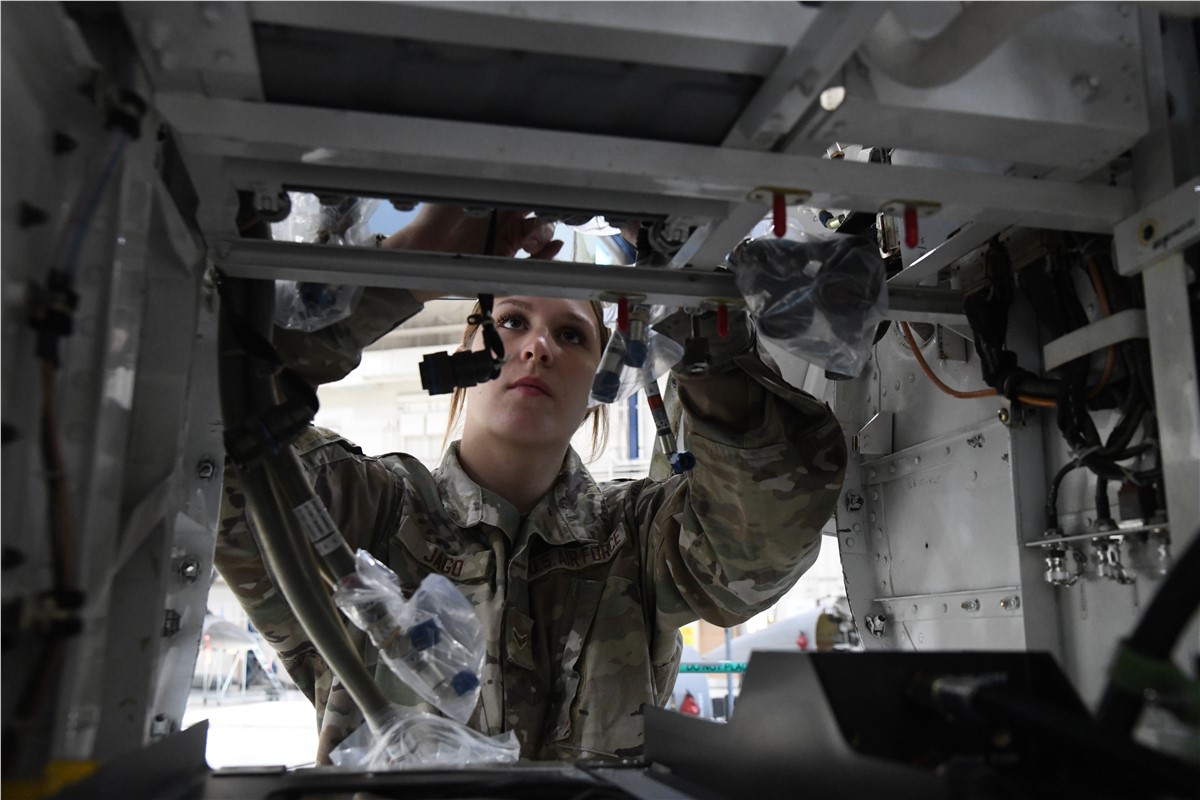
Nine Block 50 F-16CM Fighting Falcons from the 148th Fighter Wing received the new active electronical scanned array (AESA) radar that allows pilots to "find targets in the air and on the ground more easily," said Maj. Michael Kuzmuk, Chief of Wing Weapons for the 148th Fighter Wing.

"The new AESA radars are a huge leap in technology that will make the F-16more lethal and survivable against potential near peer threats," said Col. Nathan Aysta, 148th Fighter Wing Commander.

The 148th Fighter Wing is a multi-purposed Suppression/Destruction of Enemy Air Defense (SEAD/DEAD) and a NORAD Aerospace Control Alert-trained (ACA) flying Air National Guard unit located in Duluth, Minnesota.  The 148th is one of five F-16 SEAD/DEAD units in the entire U.S. Air Force and one of two SEAD/DEAD units in the Air National Guard.

Lockheed picks Northrop’s SABR for US and Taiwan F-16 radar upgrade

Northrop Grumman’s scalable agile beam radar (SABR) has been competitively selected by Lockheed Martin for the US and Taiwan air force’s F-16 Fighting Falcon’s active electronically scanned array (AESA) radar modernisation and upgrade programmes.

The radar is now scheduled to be fitted by Lockheed in USAF’s F-16 C/D fighters to enhance their reliability and add advanced capabilities as part of the aircraft’s combat avionics programmed extension suite (CAPES) upgrade programme.

Northrop Grumman ISR and Targeting Systems Division vice-president and general manager Joseph Ensor said the selection is based on the radar’s affordability, proven performance, and low risk nature.

”SABR will provide F-16s unprecedented operational capability, greater reliability and viability in threat environments beyond 2025," Esnor said.


APG-83 AESA Capability Enhancements

The APG-83 AESA provides the following capability enhancements over legacy mechanically scanned APG-66 & APG-68 radars to ensure F-16s, F-18s and other 4th gen aircraft remain operationally viable and sustainable for decades to come:

  • Autonomous, all-environment stand-off precision targeting
    • BIG SAR wide area high-res maps
    • High quality, coordinate generation
  • Greater target detection and tracking range
    • Faster search and target acquisition
    • Smaller target detection
    • Multi-target tracking
    • Robust electronic protection (A/A and A/G)
    • Enhanced combat ID
  • Interleaved mode operations for greater situational awareness
  • Maritime modes
  • 3-5X greater reliability and availability

From Gaitanakis et al.,  we can see that within scan angle of 45 degrees, the AESA radar has a greater detection range for LO targets, but the scan angle loss limits detection at 60 degrees due to the lack of a gymbal.

 Gaitanakis, Giorgos & Limnaios, George & Zikidis, Konstantinos. (2019). On the use of AESA (Active Electronically Scanned Array) Radar and IRST (InfraRed Search&Track) System to Detect and Track Low Observable Threats. MATEC Web of Conferences. 304. 04001. 10.1051/matecconf/201930404001. 

The radar has been indisputably the most important sensor in the battlefield, allowing early warning and tracking of air vehicles. Modern fighter ircraft employing AESA fire control radars are able to acquire and track targets at long ranges, in the order of 50 nautical miles or more. However, the proliferation of low observable or stealth technology has contested radar capabilities, reducing their detection / tracking ranges roughly to one third. This degradation is more severe concerning fighter aircraft radars, since most stealth threats are optimised for higher frequency bands, as in the case of fire control radars. Hence, other parts of the electromagnetic spectrum have been reconsidered, such as infrared radiation (IR). Every aircraft is a source of IR, due to fuel combustion, aerodynamic friction and IR reflection. In this way, a jet fighter can be detected by an IR sensor against the cold background of the sky. Therefore, IRST systems have re-emerged, offering an alternative to the radar. Apart from their capabilities concerning target detection (whether stealth or not), IRST systems also exhibit passive operation, resilience to jamming and better angular accuracy. On the other hand, they are prone to weather conditions, especially moisture, while they cannot measure distance directly, as in the case of the radar. This work explores and compares the capabilities and limitations of the two approaches, AESA radars and IRST systems, offering also some insight to the benefits of sensor fusion.


Light's Topology Shrugs Off Turbulence

Scientists Transmit Data via Magnetic Skyrmions in Laser Beams with 98% Fidelity Over Hundreds of Meters A laser beam scrambled beyond rec...