Tuesday, September 27, 2022

High Reliability and Radiation hardened memories for space and aerospace applications


High Reliability and Radiation hardened memories for space and aerospace applications
5h

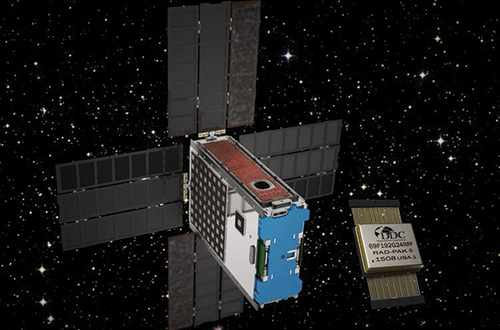
radiationmemory-500x330.png

The space race between countries has intensified from exploration and mining of the moon and asteroids,  launching large LEO constellations for providing global connectivity monitoring earth to NASA’s $10 billion James Webb Space Telescope.


Over the past three years, SpaceX has deployed thousands of satellites into low-Earth orbit as part of its business to beam high-speed internet service from space. But the company’s latest deployment of 49 new satellites after a Feb. 2021 launch did not go as planned.


As a consequence of a geomagnetic storm triggered by a recent outburst of the sun, up to 40 of 49 newly launched Starlink satellites have been knocked out of commission. They are in the process of re-entering Earth’s atmosphere, where they will be incinerated.


Future small satellite systems for both Earth observation as well as deep-space exploration are greatly enabled by the technological advances in deep sub-micron microelectronics technologies. Ensuring the reliable operation of microcircuits in outer space is an important scientific and economic objective. For modern weather, communications and surveillance satellites to be cost-effective, they need to be operational for at least 10 to 15 years.


But with extended space missions comes the requirement for flawless performance by on-board equipment over a period of years, in a very harsh environment. On takeoff, electronic components endure violent beatings from extreme vibration, and once in orbit, every material needs to be able to endure wildly shifting thermal changes that can see a cycle through 260 degrees Fahrenheit (126.67 degrees Celsius) every hour of every day.


Deep-space and long-duration missions, where both crew members and spacecraft no longer benefit from the protection of Earth’s magnetic fields, are considered high risk for adverse radiation impacts.  Aircraft flying at altitude, at about 30,000 feet and above, also are starting to experience radiation-induced effects. “There are 500 times more neutrons at 30,000 feet than there are on the ground,” points out Aitech’s Romaniuk. Long term exposure of astronauts to radiation is problematic and the effect that space radiation has on spacecraft electronics and software is equally challenging.


Future small satellite systems for both Earth observation as well as deep-space exploration are greatly enabled by the technological advances in deep sub-micron microelectronics technologies. For modern weather, communications and surveillance satellites to be cost-effective, they need to be operational for at least 10 to 15 years.  Onboard electronic equipment failures are a common reason for early satellite failure. But with extended space missions comes the requirement for flawless performance by on-board equipment over a period of years, in a very harsh environment. Ensuring the reliable operation of microcircuits in outer space is an important scientific and economic objective.


The emerging earth observation (EO/IR/SAR)  satellites all capture thousands upon thousands of terabytes of data every day, which equates to petabytes every year. And in the future, there will be even more data collected — NASA is planning two space missions called SWOT and NISAR that are expected to produce roughly 100 terabytes of data per day. Not all of this data can be sent back to earth in real time, nor should it, which means that effectively storing it in space is the only way of making this data useful and actionable.


To properly process and handle that data in space, to make that data useful, engineers have discovered acute requirements for data integrity to ensure that data retains the ability to be analyzed in space – or relayed back home for analysis. If data integrity is core to success in space, data storage is equally if not more important, for it’s the foundation on which data can be accessed, stored and analyzed.


Data storage in space needs to be able to endure the rigors of a space mission, from the challenges  relating to launch, orbit, and return to earth, and the evolution in data storage reliability has led to an evolution of advanced data storage use cases around us.


Semiconductor memory devices used in outer space, for example, in a satellite, are subjected to severe environmental conditions that may compromise the integrity of the stored data, or cause the memory devices to fail. In many cases, the memory devices are part of a larger embedded system, where the memory device is just one of many devices sharing the same die.


The integrity of the memory devices used in outer space applications is critical because the information stored by the memory devices may be related to critical functions, such as guidance, positioning, and transmitting and receiving data from a ground base station. Furthermore, semiconductor memory devices for use in space applications should remain functional for the lifetime of the satellite, which may be as long as several years. Contrast this with applications where the memory devices are also subjected to harsh operating conditions, such as guidance systems in missiles, but only for a relatively short time period.


Memory technologies

Digital information can be stored in different types of device depending on the use and how frequently the data need to be accessed. Hard disk drives are magnetic devices that allow storing terabytes of data for long time, however speed of access to the data is relatively slow (a few milliseconds). On the other hand, data that are being used by a computer processor to perform an operation need to be accessed on a much faster timescale (nanoseconds). Silicon-based semiconductor memories are categorized into volatile and nonvolatile memories.


Volatile memories, such as static random-access memory (SRAM) and dynamic random-access memory (DRAM), need voltage supply to hold their information while nonvolatile memories, namely Flash memories, hold their information without one. Most devices like smartphones and notebooks currently use a combination of dynamic random-access memory (DRAM) and flash memory, with the former acting as active memory while devices are on, and the latter being used to store data long-term (off or on).


Flash memory is widely used in consumer electronic products such as cell phones and music players. NAND Flash-based solid-state disks (SSDs) are increasingly displacing hard disk drives as the primary storage device in laptops, desktops, and even data centers. However, Flash is slow and has low endurance. The integration limit of Flash memories is approaching; NAND cannot scale down past 10nm while DRAM and SRAM are costly.


New nonvolatile memory technologies are emerging such as magnetic random-access memory (MRAM), spin-transfer torque random-access memory (STT-RAM), ferroelectric random-access memory (FeRAM), phase-change memory (PCM), and resistive random-access memory (RRAM), that combine the speed of static random-access memory (SRAM), the density of dynamic random-access memory (DRAM), and the nonvolatility of Flash memory and becoming very attractive for future memory hierarchies. Western Digital, owner of the SanDisk brand, has  unveiled what it calls the “world’s first” 1TB SD card. It’s only a prototype, but already the company is touting the card’s ability to adequately handle 4K, 8K, VR and 360-degree video when it officially becomes available


Radiation effects on memory

One cause of errors in semiconductor memory devices that are used in outer space applications is due to high-energy particles impinging on the memory device. There are several forms of high energy particles in outer space. For example, there are alpha particles and gamma rays, to name a couple. These high-energy particles strike the semiconductor material on which the memory devices are formed with enough energy to cause the generation of electron-hole pairs. The resulting charge carriers are often trapped in the various oxide layers of the memory devices.


In the case of metal oxide semiconductor (“MOS”) transistors, charges trapped in the gate oxide will shift the threshold voltage. Vt, of the transistor. As a result, leakage currents of the transistors, and consequently, of the memory devices may increase. Where the transistor is used as a transfer gate for a conventional memory cell, the increased leakage current may compromise the integrity of the data stored by the data storage node, such as a capacitor, by allowing the charge representing the data to dissipate.


The frequency or number of charges trapped in an oxide layer is proportional to the thickness of the oxide layer. Consequently, oxides having a greater thickness will, on the average, have a greater number of trapped charges.


Radiation hardening

Radiation hardening is process of making electronic components such as momeory  resistant to damage or malfunction caused by high levels of ionizing radiation (particle radiation and high-energy electromagnetic radiation), especially for environments in outer space and high-altitude flight, around nuclear reactors and particle accelerators, or during nuclear accidents or nuclear warfare.


Researchers have explored many concepts  for low-cost high-density Radiation-Hardened (RH) Non-Volatile Memory (NVM) for the design of systems for use in space environments. The general principles used to be insensitive to single event upsets is to use triple redundant logic and memories with error correcting codes (e.g. Hamming coding). Circuits with large memories and S-RAM based FPGAs should only be used in radiation environments after a careful analysis of single event upset problems. The problem of single event burnout in power MOSFETs can in many cases be resolved by using a de-rating factor of ~2 of the main voltage and current limitations of the power transistor (implies redesign of power supply).


Earlier  solutions relied  on inefficient hardening techniques, such as radiation hardening by design (RHBD), which weree implemented either in layout or in the application architecture and not in the fabrication process. Many of these solutions are based on redundancy and result in a performance penalty. Moreover, most aerospace applications preclude the use of moving parts, such as the one in a hard disk. Thus, an ultra-high density storage solution is completely lacking.


Efforts over the last two decades to develop a practical NVM solution for space have fallen short of the density and performance needs. A radiation-hard NVM that can achieve high density is needed. Commercial NVMs have greatly increased in density while reducing cost in recent years, creating a gap of more than six orders of magnitude between commercial and RH devices.


Western Digital’s Design for Reliability

Western Digital engineers have been working with companies in space on their approaches to data storage. Using an approach known as Design for Reliability (DFR) has become popularized as a standard engineering practice, which is intended to design reliability into products using state-of-the-art methods. As technology continues to advance and highly complex devices continue to shrink and miniaturize, DFR can ensure high-performance and low-voltage requirements so that new electronic components can overcome various limitations. DFR made leaps and bounds in space technology development, and the fruits of those labors are subtly penetrating more and more products.


Radiation hardened and tolerant memories

Infineon Technologies AG in Munich is introducing radiation-tolerant 256-megabit and 512-megabit NOR non-volatile Flash memory chips for space applications that involve field-programmable gate array (FPGA) configuration, image storage, microcontroller data, and boot code storage.

Qualified to MIL-PRF-38535’s QML-V flow (QML-V equivalent) the devices offer high quality and reliability standard certification for aerospace-grade integrated circuits.

Infineon’s 256-megabit and 512-megabit radiation-tolerant NOR Flash non-volatile memories deliver a low-pin-count, single-chip solution. When used at high clock rates, the data transfer supported by the devices match or exceed traditional parallel asynchronous NOR Flash memories.

The devices are radiation-tolerant to 30 kilorads (Si) biased and 125 kilorads (Si) unbiased. At 125 degrees Celsius, the devices support 1,000 program/erase cycles and 30 years of data retention and at 85 C 10,000 program/erase cycles with 250 years of data retention. Infineon leveraged the 65-nanometer floating gate Flash process technology to develop the radiation-tolerant 256-megabit quad-SPI (QSPI) and 512-megabit dual quad-SPI NOR Flash.


GSI technology introduced high-performance 288Mb SigmaQuad-II+ radiation-hardened SRAM product.” “The RadHard SigmaQuad™ SRAM leverages our proven commercial technology and architecture with radiation-hardening, creating an efficient, high performance, leading-edge memory at the 40nm technology node.” “The SigmaQuad™ SRAM product is expected to serve as a critical element for advanced systems that leverage leading-edge FPGAs, ADCs and DACs; but until now lacked the high density, high performance and power efficiency that our 288Mb memory brings,” said Paul Armijo, Aerospace & Defense Business Director of GSI Technology.


Cobham Semiconductor Solutions in Colorado Springs, Colo., is announcing QML V radiation hardened certification of their non-volatile semiconductor memory products. QML V involves especially rugged microelectronics devices that are qualified for space applications.

The MRAM-based product offering includes a 64-megabit device, UT8MR8M8, offered in a 40-lead quad flatpack, and a 16-megabit device, UT8MR2M8, available in a 40-lead flatpack.


References and resources also include:

https://patents.google.com/patent/US6194276

https://venturebeat.com/2022/03/05/data-storage-from-space-to-earth-3-takeaways-for-the-real-world/

Friday, September 16, 2022

Aero mobile Satellite communication technologies for Aircrafts and UAVs

Aero mobile Satellite communication technologies for Aircrafts and UAVs

IDST – International Defence, Security and Technologyby Rajesh Uppal 41m

The future of aviation worldwide is one of significant continuing growth in air travel, air cargo, and private general aviation. Passenger services communications are expected to generate revenue for airlines and service providers. They will require a “critical mass” of users to justify costly avionics installation and operating costs, hence they will need to be broadband services.

However, passenger aircraft remains one of the few places where ubiquitous data connectivity cannot be offered at high throughput, low latency and low cost. Airline and business jet passengers are demanding Internet connectivity as they travel across the globe. A survey by Honeywell revealed that nearly 75% of airline passengers are ready to switch airlines to secure access to a faster and more reliable Internet connection on-board and more than 20% of passengers have already switched their airline for the sake of better in-flight Internet access.

They will therefore evolve in a market-driven way, in fits and starts, with successes and failures dependent upon the quality and usefulness of service, customer acceptance, and service cost.  While the quality of service improves and costs are reduced, user demand for on-board communications connectivity will increase as the general public grows accustomed to ubiquitous access to wireless access in flights.

This is leading to increasing demand for high bandwidth data access on commercial aircraft for both business jets and major airliners. Until now such high bandwidth data links have been predominantly provided when the aircraft is over land, using a system of ground-based installations to provide the link to the aircraft. For full transcontinental coverage, SATCOM is the only effective way of providing connectivity with Inmarsat’s L-band coverage, for example.

In the future, to achieve the required bandwidths, the frequency of operation must move to the Ku-band or Ka-band to support data rates up to 1000 Mbps. New satellites are being launched that support higher frequencies to enable this increase in bandwidth.

SATCOM systems traditionally have utilized geostationary Earth orbit (GEO) satellites—satellites that relative to the Earth’s surface will stay in a fixed location. To achieve geostationary orbit, the satellite must be at a very high altitude—over 30 km from Earth’s surface. The benefit of such a high orbit is that very few satellites are needed to cover a large area of ground, and transmitting to the satellite is simplified because it has known, permanent coordinates. Due to the launch cost of these systems, they are designed for long lifecycles, resulting in a stable but sometimes antiquated system.

Because of altitude and radiation challenges, additional device screening or satellite shielding is often needed. Furthermore, because the satellite is so far away, there will be significant loss with the user on the ground, impacting signal chain design and component selection. The long ground-to-satellite distance also results in high latency between the user and the satellite, which can impact some data and communication links.

The proliferation of UAVs in the defense (and soon the commercial world), has created a new arena of SATCOM links. UAVs face similar challenges. The advanced defense-focused UAVs are required to operate around the globe with remote piloting, possibly from a different continent. These requirements drive a need for high bandwidth datalinks to support video, control, and advanced payload data, potentially saturating the existing communications infrastructure. With commercial UAVs also set to have expanded coverage in the future, global network high bandwidth connectivity will pose the same SATCOM challenges as in commercial aviation.

At the same time, supporting legacy data links, minimizing size, weight, and power (SWaP), and reducing investment in system development is driving a need to develop flexible architectures and maximize system reuse. Recently, many alternatives or complementing systems to GEO satellites have been proposed, with UAVs and low Earth orbit (LEO) satellites being considered. With lower orbits, these systems mitigate most of the challenges described with GEO-based systems, but at the expense of reach, with many more satellites or UAVs required for similar global coverage.

Challenges

Terminals in the aeronautical market work under one of the most difficult environments. Antennas carry very sophisticated requirements in terms of form factors (aerodynamic limitations), weight, pointing accuracy, reliability and many other technical requirements. Similarly, RF equipment has strong limitations in size and weight, while skyrocketing throughputs continuously demand more power. Modems orchestrate the link offering high-quality, high-speed communications in this challenging ecosystem.

Modems and baseband equipment operating in this vertical have very sophisticated requirements. The global nature of demand involves high initial CAPEX investments in baseband equipment. Routes and traffic patterns change depending on the season, and anytime of the day, which
requires very flexible networks. Consequently, requirements for the network management system are very sophisticated and include ensuring advanced Service Level Agreements for individual aircrafts and fleets running applications at different priority levels with planes constantly migrating to different beams and satellites — all this with end-users enjoying the highest standards of connectivity.

Ultimately, beam hopping and beam forming are capabilities that ground platforms and the space segment need to coordinate to optimally utilize capacity. Equipment must serve all these requirements, while meeting the stringent, expensive, and exhaustive certification process involved for any equipment used in the aeronautical sector.

Aeronautical channel model for satellite communications

Designing a satellite airborne technology for the military is significant technology advancement, yet it presents several distinct, technical challenges. Propagation effects of aeronautical channels differ from maritime and land mobile propagation because of the high velocity of aeroplanes, their distance from ground and influence of the aircraft body on antenna performance.

Aeroplane manoeuvres can affect signal under conditions when aircraft antenna is shadowed by the aircraft structure. When considering helicopters, the rotation of the rotor blades causes a cyclic interruption to the signal path.

An aeronautical channel model for satellite communications needs to consider two main contributions:
• a strong line of sight (LOS) component that is present all the time (except during maneuvers where the satellite signal might be blocked by the aircraft body) affected by ionospheric and tropospheric effects, and possibly by specular and/or diffuse scattering from the aircraft;
• a surface (ground, sea, ice, snow) scattering component which arrive with a certain delay, phase and attenuated power with respect to the LOS component.

The overall channel is considered time-varying due to various conditions: atmospheric dynamics, geometry changes due to aircraft flight (affecting not only the LOS, but also the fuselage scattering at each instant), dynamics of elements on the fuselage (e.g. blades for helicopters), time-variation of the surface scattering, and dynamics of the surface (e.g. sea waves). The effects of antenna pattern must not be neglected, the type of antenna may mitigate ground and fuselage multipath effects, but in cases such as banking maneuvers, multipath may arrive as strong contribution impacting the communications signal.

Researchers have designed a software tool for propagation analysis of satellite to aeronautical communications, including more physically based models, valid from VHF to Ka-bands, and which could take into account the following technical issues:
• modifications induced on the antenna pattern by its installation on the platform,
• geometry of the trajectory and platform dynamics during movements including the attitude,
• surface scattering effects for sea and ground surfaces, including vegetation layers,
• atmospheric effects due to troposphere at different altitudes and ionosphere.

Signal shadowing and multipath influence system design in a number of ways: signal blockage affects link reliability; and multipath noise causes errors in digital transmission.  frequency-selective fading causes inter-symbol interference when signal bandwidth exceeds the coherence bandwidth;

Airborne COTM networks must be able to efficiently and reliably support a wide range of throughput rates from basic email, to flash override Voice over IP (VoIP), to high-definition video.

These applications must operate on fast-moving aircraft, using a very small antenna and overcoming issues like the Doppler Effect and rain fade. An airborne COTM network must also support near seamless global coverage, track deployed units and manage beam switching while meeting stringent security and budget requirements.

The Doppler Effect is the change in frequency of a wave, as perceived by a receiving station, as either the transmitter or the receiver moves. Doppler frequency jitter appears as noise-causing detection errors, and Doppler frequency shift has to be compensated.

Historically, the Doppler Effect in satellite transmission has been a secondary consideration arising from the satellite’s motion in its station-keeping box. With highspeed vehicles such as aircraft, the Doppler Effect has a great impact on the effectiveness of demodulators. Therefore commercial aircraft systems such as  iDirect include built-in Doppler Compensation features that handle satellite frequency shifts to ensure seamless availability and performance.

LEO satellites potentially offer some relief. These operate at a much lower altitude—roughly 1 km off earth’s surface—but at this altitude they are not stationary, and in fact sweep across Earth’s surface, with an orbital cycle of roughly 30 minutes. The low altitude reduces the launch cost, and with a less harsh environment potentially less screening and shielding is needed. And critically, the low altitude means less propagation delay. But the primary difficulty for a LEO system is that the satellite is only within range of the user for fairly short bursts, necessitating the use of handoffs.

Technologies

Providing high-speed connectivity through small mobile antennas is one of the toughest challenges of airborne COTM. Sub-one meter antennas required for COTM have low gain characteristics. Higher power is required to ensure the receiving terminal hears the remote over the background noise created when the satellite boosts the signal. These high-rate signals coming from small antennas often cause interference with adjacent satellites that may be using the same frequency and polarization.

Advances in satellite manufacturing and directional earth-station technology, particularly the development of multi-axis stabilized earth-station antennas capable of maintaining a high degree of pointing accuracy, while stationary or on rapidly moving platforms, have made earth stations with very stable pointing characteristics both available and practical.

Network engineers must provide broadband connectivity to moving platforms without causing, or being impacted by, adjacent satellite interference. The solution is spread spectrum technology. Spread spectrum is a satellite router feature that diffuses high rate signals by “spreading out” the transmissions to minimize the interference to adjacent satellites without limiting connectivity to the target satellite. Yet, this can come at high bandwidth cost.

Automatic Beam Switching

Recent years have also seen several advances in satellite systems and networks, allowing better efficiency, reliability, increased data rates, and new applications. New paradigms such as mega constellations are manifest, triggering significant investments in future constellations. By 2020-2025 there will be more than 100 High Throughput Satellite (HTS) systems using Geostationary (GEO) orbits but also mega-constellations of Low Earth Orbit (LEO) satellites, delivering Terabit per second (Tbps) of capacity across the world.

Multibeam satellite systems have been specifically developed to allow efficient frequency reuse and high-throughput broadband rates across the coverage area, not unlike their terrestrial cellular counterparts. Satellite broadcasting via geostationary satellites will remain in widespread use. It will be a main source of revenue for satellite operators for the foreseeable future. But technology evolution in the coming years will also offer the possibility of new services via “very high throughput satellites (VHTS)” and “multispot” geostationary satellites, says ITU.

Military aircraft typically travel across multiple satellite beams. This presents an important service continuity challenge as an onboard remote must maintain a connection across these beams. iDirect handles this through a technology called Automatic Beam Switching (ABS). With ABS, iDirect remotes can travel across satellite footprints and maintain seamless connectivity without the need for manual intervention.

Ku-Band/Ka-Band

These systems often required two, and sometimes even three, stages of analog upconversion and downconversion, each requiring a synthesizer, amplification, and filtering that drives up system SWaP. However, to fit within the existing airliner infrastructure and power distribution system incorporating such signal chains for all the possible data links may be untenable.

The large number of components, power consumption, and isolation challenges means the printed circuit board (PCB) will be large. And because of the high frequency routing, more RF appropriate PCB material may be needed, significantly impacting cost. With a need to continue to support the L-band frequency of operation, the SWaP and design effort challenges are compounded.

Antenna requirements and technologies

Providing high-speed connectivity through small mobile antennas is one of the toughest challenges of airborne COTM. Sub-one meter antennas required for COTM have low gain characteristics. Higher power is required to ensure the receiving terminal hears the remote over the background noise created when the satellite boosts the signal. These high-rate signals coming from small antennas often cause interference with adjacent satellites that may be using the same frequency and polarization.

Global Network Management

To achieve global coverage, airborne remotes need to traverse networks on various transponders and satellites, controlled from a variety of hubs and networks. This poses a number of challenges for IP networks and Network Management Systems (NMS) regarding how to track and authenticate remote units, monitor service reliability and manage Service Level Agreements (SLAs). Security is a top priority for military operations. For mobile remotes on an IP satellite network, this means secure channel activity, control channel information, unit validation, physical security and data encryption.

References and Resources also include:

https://dial.uclouvain.be/pr/boreal/object/boreal%3A182406/datastream/PDF_01/view

Saturday, September 10, 2022

Satellite or Space-based cellular networks to provide Broadband service directly to cell phones – International Defense Security & Technology Inc.

Satellite or Space-based cellular networks to provide Broadband service directly to cell phones – International Defense Security & Technology Inc.

Satellite or Space-based cellular networks to provide Broadband service directly to cell phones
2h

Recently many companies have launched large constellations of satellites to deliver broadband Internet to serve nearly 2 billion people around the world that live in areas that lack mobile coverage, mostly far from major cities, which makes building a network of terrestrial cell towers to connect them prohibitively expensive. These companies such as SpaceX, OneWeb, Amazon, and Telesat, are planning LEO satellite constellations, but all of these services will require a user terminal like the  DirecTV satellite dish or satellite phones to send and receive signals to low Earth orbit.

Satellite phones have been around for decades, but they are expensive and their brick-like form factor was inconvenient for everyday use. Now a handful of companies are working to fix this problem by building satellites that can connect to regular cell phones and provide high-bandwidth mobile data anywhere on earth.

AST SpaceMobile intends to build what it claims will be the first global cellular broadband network in space to operate directly with standard, unmodified mobile devices. The key advantage is it works with any existing mobile, and you just need to buy a subscription to connect to their network. And people like Vodafone and others are partnering with them.”

However, building an extraterrestrial mobile network has many challenges, first is the high mobility of around 17,000 mph, 300 miles above the ground. If you want to connect with cell phones from space, you need an antenna that is sensitive enough to collect their weak signals and powerful enough to return a signal that can be picked up by a cell receiver.

“The hard part is the uplink from the phone,” says Charles Miller, cofounder and CEO of Lynk, a satellite communications company based in Virginia. “You can’t change the phone to add more power. It needs to work out of pocket.”

Another challenge was compensating for the huge amount of doppler shift between the satellite and mobile phone on the ground. Existing phones and mobile networks are set up to accommodate bullet train speeds but not orbital velocities. Lynk engineers had to devise the technology for the satellite to perform this doppler compensation in space so that the phone “sees” what appears to be a fixed tower.


Lynx

Another Virginia-based company, Lynk says it has successfully demonstrated the ability to use ordinary, unmodified mobile telephones to connect to satellite Internet services. In Feb 2022, the company announced the successful completion of pre-commercial tests for its fifth “Shannon” satellite. The completion of this technical milestone advances toward Lynk’s planned deployment of its global ‘cell-towers-in-space’ service in 2022.

After some initial tests, the company said “hundreds” of mobile phones in the United States, United Kingdom, and the Bahamas were able to connect with the satellite as it passed overhead, as if it were a virtual cell phone tower in space. “Basically, our satellite looks to your cell phone like a standard cell tower,” said Charles Miller, the co-founder and chief executive of Lynk.

Lynk is building a network of small satellites to provide affordable cellular coverage to unmodified cellular devices, enabling messaging, data, IoT, and emergency communications everywhere on the planet. The genesis of Lynk stems from the 2014 Ebola outbreak in West Africa, where one of the company’s founders saw first-hand the need to connect Ebola frontline health workers in one of the most remote regions of the world. By inventing the technology that is solving major connectivity problems for the planet—we are helping to protect billions of people vulnerable to the diseases, disasters, and emergencies that can strike any of us … at any time.

These spacecraft have enabled Lynk to conduct the world’s first orbiting cell tower demonstrations for a space-based cellular network. In a very short period, the test program has already successfully demonstrated critical functionalities needed for satellite-to-phone messaging initially using GSM technology.

The difference with Lynk, Miller says, is that with its 1 m × 1 m satellite there is no terminal needed, nor even software to download. The service is intended to serve remote areas where a customer’s mobile provider, such as T-Mobile or Verizon in the United States, does not have coverage. So like when you travel to a foreign country and are asked whether you want to use a local service with international roaming charges, a similar message would pop up when exiting a mobile provider’s coverage area. Lynk, in this way, shares spectrum with the mobile network operator.

The current 4G/5G Mobile phones connected to terrestrial towers generally have a range limited to around 35 kilometers if the line of sight is not interrupted by hills, buildings, or foliage. The signal can in fact travel further, but the reception range is artificially limited by the highly accurate time frames of the mobile phone protocol and the curvature of the Earth.

However, with Lynk’s patented, proven technology, the phone signal can reach an orbiting satellite 500 kilometers overhead without interrupting the mobile phone protocol. In short, the “cell tower in space” just looks like a standard cell tower to the phone in your pocket.  Each satellite will use a modified version of terrestrial cell tower software that corrects for things like the Doppler frequency shift caused by the satellite rapidly passing overhead and the delay from sending a signal to space and back.

The satellites operate on a relatively low frequency compared to other communications satellites, which means they can tap into the part of the spectrum used by cell phones on earth. Miller says the company has developed an antenna that is both sensitive and powerful enough to communicate with cell phones on earth, but declined to get into specifics of the technology.

Lynk is starting small. With a single satellite, coverage is only available for a few minutes daily, across several degrees of latitude. With 10 satellites next year at an altitude of about 500 km, Miller said, the goal is to have coverage for much of the planet every several hours. By 2023, with about 100 satellites, there would be coverage every 5 to 20 minutes. To build a continuous, real-time network will require 1,500 satellites, he said.

“When people are presented with having nothing, or a satellite every 15 minutes, we are much better than nothing,” Miller said. “It’s a life-saving technology.” With limited bandwidth, initially the service will offer text messages only—focusing on the life-saving potential for users in the aftermath of a hurricane or lost on a mountaineering expedition or at sea. But eventually there will be enough satellites to serve broadband Internet, Miller said. Prices for the service will be set by the mobile network operator.


Lynx Technology

Lynk’s innovative approach to technology development has enabled an agile and rapid advance toward demonstrating the core technologies needed to deploy a space-based cellular network which is backward compatible for the cell phone in everyone’s pocket around the planet.

The company’s core technology is a software modification to a typical telecom software stack for LTE, GSM, and/or other 3GPP technologies. The initial step in the Lynk technology development roadmap was to develop, test, and demonstrate the ability of our proprietary telecom stack modifications to handle the Doppler shift and the propagation delay experienced between a standard cell phone and an orbiting satellite. Without these changes the phone would not work with a spaceborne “tower.”

Our objective was to prove that we could move telecommunications traffic between a base
station (or cell tower) in orbit and an unmodified standard cell phone on the ground. To achieve this goal, two critical objectives must be met: 1) write the software that can complete the connection, and 2) design and develop a spacecraft system that can fly it in orbit to conduct a successful field demonstration.

The technical and programmatic approach is to push the limits on space mission timelines and development cycles – squeezing design, build, test, flight iterations into time periods shorter than 6 months.

Lynk flies new space hardware every ~6 months to incrementally space qualify our LEO-to-phone space technologies. Each 6-month cycle includes the design, fabrication, assembly, and test of a new spacecraft iteration before handover for launch. During initial technology development, Lynk has leveraged the ISS and NASA’s cargo resupply (CRS) missions; these missions offer frequent and affordable access to orbit in support of Lynk’s rapid prototyping and agile development timelines.

Aggregate results from the first 4 missions (~18 months) of rapid technology development and on-orbit testing

  • Spacecraft flight hardware and software qualified, verified, and improved through 4
    design, build, integration, test, and fly iterations. The Lynk 02 payload was designed, prototyped, assembled, tested, licensed, and put through the NASA safety review process in less than 5 months.
  • Verification and validation of the payload design and link budget to within 1 dB of models. Ground teams were focused on validating payload RF front end performance with signal
    measurements on the ground.
  • Demonstrated movement of SMS text message from a satellite to a standard smartphone
    using the cellular broadcast protocol
  • Demonstrated ability to control and reprogram satellite in orbit using both ground and
    inter-satellite links. Lynk 02 mission demonstrated our ability to handle commanding, collect telemetry, and reprogram flight and payload computer software through and inter-satellite link between the payload and a commercial communications constellation
  • 36 testing partners (including 27 MNOs representing 1.5 billion subscribers, or 25% of the
    global telecommunications market)
  • Test licenses were acquired in 11 countries around the planet
  • No evidence of interference with cellular networks on the ground during testing


AST SpaceMobile

Lynk is not the only company working to directly connect terrestrial phones with satellites. A Texas-based company, Midland, Texas, headquartered AST SpaceMobile, launched a small test satellite called BlueWalker 1 in 2019, validating its satellite-to-cellular architecture. The spacecraft successfully managed communications delays from low Earth orbit and the effects of doppler in a satellite-to-ground cellular environment using the 4G-LTE protocol, the company said.

AST’s next prototype spacecraft, BlueWalker 3, is expected to launch aboard a SpaceX mission from Cape Canaveral, Florida, in 2022. The BlueWalker 3, which is a 693-square-foot phased array for planned direct-to-cell phone connectivity at 4G/5G speeds will validate the company’s space-to-cell network for testing with mobile network operators. The spacecraft has an aperture of 64 square meters and is designed to communicate directly with cell phones via 3GPP standard frequencies.

AST’s system will consist of dozens of small, pizza box-sized satellites flying in formation as they receive cell signals. Some experts estimated that AST is building a new, unproven type of satellite constellation that’s a riff on so-called “fractionated satellites,” which divide the capability of one large satellite among several smaller ones.

According to AST’s founder and CEO Abel Avellan, the system isn’t truly fractionated because each of the small satellites will have the same capabilities, rather than splitting the functionality of one larger satellite. But the formation will be managed by a large control satellite, which will direct network traffic and satellite movement like a conductor leading an orchestra. Although the later versions of the satellites in AST’s system will communicate with one another over Wi-Fi or a similar wireless protocol, Avellan says the first satellites to go up will be physically connected.

The advantage of AST’s approach is that the satellites can be spread out over hundreds of feet. Since each satellite is itself a receiver and is working in tandem with the others, this has the effect of creating a massive antenna. “In essence we are building a very, very large satellite with a lot of power that can connect directly to a handset,” says Avellan. “Our system is a replica of the terrestrial network in space.

The company has entered into agreements and understandings with mobile network operators that collectively cover approximately 1.5 billion mobile subscribers. Partners in this effort are leading global wireless infrastructure companies that include Vodafone, Rakuten, and American Tower.

However, AST has yet to obtain permission from the Federal Communications Commission for access to the US market. Previously, NASA has raised concerns about the large size of the proposed satellites.  In order to provide service, AST plans to build spacecraft with large phased array antennas—900 square meters. According to NASA, in planning for potential conjunctions with other satellites and debris in this orbit, this would require proscribing a “hard-body radius” of 30 meters, or as much as 10 times larger than other satellites.

Maneuvering around the proposed SpaceMobile constellation would be extraordinarily taxing, NASA said. “For the completed constellation of 243 satellites, one can expect 1,500 mitigation actions per year and perhaps 15,000 planning activities,” the space agency stated. “This would equate to four maneuvers and 40 active planning activities on any given day.”

Finally, the space agency is concerned because AST has never built a satellite remotely close in size to the 1-ton or larger vehicles that will populate its constellation. Given this lack of experience, it is expected that 10 percent or more of the satellites may fail, making them unable to maneuver to avoid collisions. NASA found the risk of a catastrophic collision to be “unacceptably high.”

ASIC enables broad access to space-based mobile network

U.K. custom design house Ensilica has announced it is developing the cellular ASIC that will enable AST SpaceMobile’s planned space-based cellular broadband network. The ASIC will be a key communications component of the spacecraft electronics payload for AST SpaceMobile.

Ensilica’s business development director, Paul Morris said, “The big challenge of making this work is the limited power supply from the solar cells. If you imagine a satellite, as it goes around the earth, with a low earth orbit satellite you’re in the sun for a certain proportion of the orbit, and then you’re in total darkness. So, in the small time you’re in the sun, you can charge and then the rest of the time you’re running on batteries. That limits the power budget. The challenge they brought to us was to build a modem design that met all their communications specifications, that met the power budget.

“And the only way of doing that was to come up with a novel architecture and to use a very advanced semiconductor process node,” Morris continued. “We can’t say which one it is, but we can say it’s an advanced node and these weren’t available even a small number of years ago. It wasn’t possible to do this before. You could never have got the signal processing down low enough to actually run it off the solar cells. And that’s really the breakthrough, I think.”

“And the only way of doing that was to come up with a novel architecture and to use a very advanced semiconductor process node,” Morris continued. “We can’t say which one it is, but we can say it’s an advanced node and these weren’t available even a small number of years ago. It wasn’t possible to do this before. You could never have got the signal processing down low enough to actually run it off the solar cells. And that’s really the breakthrough, I think.”

Inherent to the challenge is meeting the performance requirements within the power budget. This means managing the tradeoffs between bandwidth, transmit power, receive sensitivity, and power consumption, all of which are at odds with each other.

References and Resources also include:

https://arstechnica.com/science/2021/09/a-virginia-company-has-connected-mobile-phones-directly-to-satellites/

https://www.wired.com/story/your-phone-may-soon-receive-4g-service-from-space/


Synthetic Aperture Radar Drone Gets Interferometric Imaging | Hackaday

Synthetic Aperture Radar Drone Gets Interferometric Imaging | Hackaday Backyard Coherence: A €1,000 Drone SAR Achieves Repeat-Pass Interfero...