Top 10 Navies in the World | Defenceaviationpost.com
9h
Which navy is the strongest in the world? How strong are the top 10 navies?
Our list of the top 10 navies is based on the ships and submarines in
their fleets. This analysis looks at how well the world’s navies can
attack.
At the moment, these are the top 10 most powerful navies in the world:
United States
Image credit : Business Insider
At the moment, the US Navy is the most powerful navy in the world.
After the Cold War ended at the beginning of the 1990s, the US Navy
changed its focus from preparing for a large-scale war with the Soviet
Union to preparing for small-scale wars in other parts of the world. The
US fleet keeps getting smaller because funding is getting less and
there aren’t enough threats. However, most of the big ships and the
deadliest submarines are being replaced by smaller ones. The US fleet is
well taken care of. New ships and weapons keep coming out. Nearly 320
000 people work for the US Navy.
The US Navy has 11 big ships called aircraft carriers that are used
to show power. There is one aircraft carrier from the Ford class and 10
from the Nimitz and Improved Nimitz classes. Each of these aircraft
carriers can hold between 70 and 80 planes. It is bigger and stronger
than the whole air force of many countries. The aircraft carriers are
used in groups called “carrier battle groups.” They are accompanied by a
large number of warships and attack submarines. These escorting ships
and boats protect the carriers from threats that come from the air, sea,
and underwater. Also, these escorts give the strike force more ways to
attack.
The US Navy has a lot of power to attack from the water. Eight to
nine America class and Wasp class amphibious assault ships are used by
the so-called “gator navy.” Each of these warships can hold between
1,700 and 2,000 marines and their armoured vehicles. Tiltrotors,
helicopters, and hovercraft bring the marines and their vehicles ashore.
Most aircraft carriers aren’t as big as these warships. There are also
11 large amphibious transports of the San Antonio class that can also go
on long-range amphibious missions. Even though it is not part of the US
Navy, the US Marine Corps has more than 180 000 people in it and its
own naval aviation.
There are 22 cruisers that belong to the Ticonderoga class. These
were the first surface combatant ships to have the most advanced air
defence system in the world, called AEGIS. These cruisers are made to
stop missile attacks on battle groups.
The US Navy is making 3 Zumwalt class destroyers that are very
advanced and can hide in plain sight. These destroyers are the biggest
ones ever made. In fact, the Zumwalt class ships are more like cruisers
than destroyers because of their size, weight, and weapons. The main
goal of these warships is to attack on land, but they can also do
anti-aircraft and naval fire support. There are also 64 general-purpose
destroyers from the Arleigh Burke class. Their weapons and systems are
very advanced.
The US Navy does not have any frigates in use. Instead, Freedom- and
Independence-class littoral combat ships have been put in their place.
These small ships don’t have many weapons and aren’t made to fight
against ships of the same size.
The US Navy has three Seawolf class nuclear-powered attack
submarines. These submarines are very advanced. The boats that other
countries use are not nearly as advanced as these ones. There are also
35 older Los Angeles class boats and 14 new Virginia class boats in use.
There are 14 Ohio class boats that are still in use and can carry
ballistic missiles with nuclear tips. These ballistic missile submarines
patrol in waters close to the US or in the more remote parts of the
world’s oceans. This makes it almost impossible to take effective
anti-submarine measures.
The US Navy has more than 3,700 planes. Most of them are multi-role
fighters from the F/A-18 series and other planes that are also used on
aircraft carriers.
Russia
Image credit : REUTERS
After the Soviet Union broke up, the Russian navy took over the fleet
of the Soviet navy. Since the end of the Cold War in the early 1990s
and ongoing problems with money, the size of the Russian fleet has
shrunk by a lot. Most of its ships are left over from the Cold War. Due
to a lack of money, the Russian navy has had trouble keeping its big
warships in good shape for the past 20 years. Still, with around 140 000
people and a lot of warships and submarines, it is still a very strong
force.
The Admiral Kuznetsov is the only aircraft carrier that the Russian
navy has. It can’t do as much as the American carriers and can’t carry
as many planes. Even so, it is still a strong and dangerous ship.
Accidents and plane crashes happen a lot while the Admiral Kuznetsov is
in service with the Russian navy. The ship’s system for moving forward
isn’t working right. Russia has a hard time keeping its only aircraft
carrier in good shape and working. Russia has no plans to build a new
ship to replace this one right away.
The Russian navy only has one Petr Veliky battlecruiser, which they
seem to have trouble keeping in good shape. Also, there are two smaller
Slava-class missile cruisers that are very good at fighting ships,
planes, and submarines.
There are about 15 destroyers, some of which are anti-submarine
destroyers from the Udaloy class and general-purpose destroyers from the
Sovremenny class. There are also about 24 corvettes and 9 frigates.
The Russian naval infantry is not very big. There are only about
12,000 people in it. Marines are dropped off on land by a single
amphibious transport ship from the Ivan Gren class. There are also 14
landing ships from the Ropucha I and Ropuch II classes and 4 landing
ships from the Alligator class. These ships can go from water to land
and back again over a long distance. But compared to their US
counterparts, the Russian amphibious transports are much smaller and
less capable.
The Russian navy has a number of attack submarines that are powered
by nuclear energy. There are a few nuclear-powered boats in the Akula
class. These boats make up about half of Russia’s fleet of
nuclear-powered attack submarines, which is getting smaller. A couple of
new Graney class boats that run on nuclear power are being built. Also,
there are 3 submarines of the Oskar II class that carry cruise
missiles. These attack submarines are the biggest ones ever built, and
they are meant to attack US aircraft carrier battle groups and coastal
installations. Also, diesel-powered Kilo class patrol submarines are
used to protect naval bases.
It looks like the Russian navy is putting a lot of money into its new
ballistic missile submarines of the Borei class. Three of these boats
are already in use, and another five are being built at a pretty fast
rate. Intercontinental missiles with a nuclear warhead are on these
boats. There are also a few older ballistic missile boats from the Delta
IV class that are also a big threat. It’s important to remember that
older Russian submarines of all types might be less ready to go due to a
lack of money.
On paper, the Chinese navy has more ships and more tonnes than the
Russian navy. But the Russian navy has a number of ballistic missile
submarines that have been tested and are very dangerous.
Russian naval aviation has about 360 planes, including a small number
of Tu-142 long-range anti-submarine warfare aircraft, Il-38
medium-range anti-submarine warfare aircraft, and Su-24 tactical
bombers.
China
Image credit : By eng.chinamil.com.cn
The People’s Liberation Army Navy is what the Chinese navy is called
by name. It was mostly a riverine and coastal force until the late
1980s. China has been adding to its fleet since the early 1990s. At the
moment, new warships and submarines are being built quickly. About 255
000 people work for the Chinese navy. In terms of the number of tonnes,
it is the second largest navy after the US Navy. Also, the most
important fighters are in this war.
By 2018, the Chinese navy only had one aircraft carrier, the
Liaoning. It is mostly used to teach people how to sail. But in 2019,
the Shandong, a ship with a similar design, was put into service.
About 30 destroyers, 50 frigates, and 40 corvettes are in the fleet.
Even though some of the older warships are not as good as their Western
or even Russian counterparts. On the other hand, very advanced new
warships are being built very quickly. Also, about 5 or 6 guided missile
cruisers from the Type 055 class are almost done and should be ready to
go by 2020.
The Chinese amphibious assault forces use 32 tank landing ships, 31
medium landing ships, and 4 amphibious transport docks. There are 10,000
marines in the Chinese navy who can be sent to hostile shores.
A fleet of 68 submarines is run by the Chinese navy. These are 4
ballistic missile submarines of the Jin class. They are powered by
nuclear power and can carry intercontinental ballistic missiles with
nuclear warheads. But so far, these missile submarines haven’t done any
operational deterrence patrols. This could be because of problems or
flaws in the way they were built. Still, there is a good chance that
these missile boats will survive the first attack once the country has
been attacked. There are also 13 Song class diesel-powered patrol
submarines and 15 Yuan class diesel-powered patrol submarines. There are
also two Shang class nuclear-powered attack submarines, one Qing class
diesel-powered attack submarine, and 15 Yuan class diesel-powered patrol
submarines.
More than 700 planes are also used by the Chinese navy. Its main job
is to protect the fleet from air attacks. Over 140 fighters can do more
than one thing. A number of JH-7 maritime attack aircraft and more than
30 H-6 medium-range bombers are also used by the Chinese naval aviation.
The US carrier battle groups are meant to fight with these.
Japan
Officially called the Japan Maritime Self-Defense Force (JMSDF),
Japan’s navy is made up of 50,800 people, over 150 ships, and almost 346
planes. Japan’s constitution says that the Maritime Self-Defense Force
can only teach defensive tactics.
It runs warships and submarines that are very advanced in terms of
technology. Also, the Japanese navy is kept in a state of high readiness
and works very well. So, Japan’s navy doesn’t have as many warships or
as much weight as China’s navy, but Japanese warships are usually more
advanced and have more cutting-edge weapons. The JMSDF, on the other
hand, doesn’t have any nuclear weapons.
There are no aircraft carriers in the Japanese navy, but there are
two big Izumo class and two small Hyuga class helicopter carriers. These
ships can do more than one thing. They can be used for amphibious
operations, war against the surface, and war against submarines. The
Maritime Self-Defense Force can project a lot of force with the help of
these big helicopter carriers. As a response to China’s fast fleet
growth, it was announced in 2018 that the Izumo class warships will be
rebuilt as aircraft carriers.
The Japanese navy has 26 destroyers, including 2 large anti-air
destroyers of the Atago class and 4 large general-purpose destroyers of
the Kongou class. In fact, these military ships are almost as big as
cruisers. Also, there are 4 destroyers of the Aikizuki class.
There are about ten frigates and six small destroyers (corvettes).
The JMSDF has 3 big ships that can land. The Marines of Japan are not
very big, with just over 3000 people. The Japan Ground Self-Defense
Forces are in charge of this naval infantry. The official job of Japan’s
marines is to attack and take back islands that have been taken. Even
though Japan is slowly putting together more expeditionary units.
About 20 submarines are part of Japan’s navy. These attack submarines
are interesting because they are powered by diesel. Japan doesn’t use
military warships that are powered by nuclear energy, so it built
diesel-powered boats with advanced technology that can stay at sea
longer and do a lot of damage. But Japan doesn’t have any nuclear
ballistic missiles or ballistic missile submarines.
There are about 70 Lockheed P-3C Orions and 12 Kawasaki P-1 maritime patrol planes in Japan’s naval aviation.
United Kingdom
Image credit : CROWN COPYRIGHT
The official name for the Navy of the United Kingdom is the Royal
Navy. From the middle of the 18th century on, the Royal Navy was the
strongest navy in the world. It had power that no one else could match,
and it was a key part of building the British Empire. It wasn’t until
World War II that the US Navy was able to do better. The Royal Navy is
currently focused on expeditionary operations and is still one of the
best blue-water navies in the world. But because of less money, its size
and number of warships are slowly shrinking. At the moment, there are
about 33,000 people in the Royal Navy.
The Queen Elizabeth class aircraft carrier is the only type of ship
used by the Royal Navy. The second ship of this class is expected to be
put into service in the coming years. Even though these are smaller than
Russian and Chinese carriers and a lot smaller than US carriers.
The British navy has six anti-air warfare destroyers from the Daring
class. These ships can patrol large areas and defend the fleet’s
airspace. Along with the Daring class destroyers, there are also 13 Duke
class frigates. Most of the time, these frigates are used to fight
against submarines.
The Royal Marine Commando Brigade is a well-known part of the Royal
Navy. About 7,700 people are in this brigade. The Royal Marines are the
best naval infantry force in the European Union. There are three
logistical landing ships from the Bay class next to two landing ships
from the Albion class.
There are 3 nuclear-powered attack submarines of the Astute class
that are still in use. Four more boats of this type are being built.
There are also 3 nuclear-powered attack boats from the Trafalgar class
that are still in use but will be phased out over the next few years.
The Royal Navy also has 4 ballistic missile submarines of the
Vanguard class. Each of these ships can hold up to 192 nuclear bombs.
This much weight is enough to wipe out whole countries. At any given
time, only one Vanguard-class boat is on a deterrence patrol.
Information about these patrols is still very secret.
Most of the time, the British Fleet Air Arm uses naval helicopters
for search and rescue, anti-submarine warfare, utility, and other tasks.
Both the Sea Harrier and the Harrier II close support aircraft were
taken out of service in 2006 and 2011. As a replacement, a number of
F-35B stealthy multi-role fighters were ordered. These will be run from
the new aircraft carriers in the Queen Elizabeth class.
France
Image credit : French Navy Photo
One of the oldest naval forces in the world is the French Marine Nationale. It has about 36,000 employees right now.
The Charles de Gaulle aircraft carrier is the only ship used by the
French navy. It is the French navy’s main ship. It is the only aircraft
carrier built outside of the United States that runs on nuclear power.
But it is a lot smaller than US airlines. Plans were made for a second
aircraft carrier that would be like the British Queen Elizabeth class,
but these plans were eventually scrapped.
There are 2 modern anti-air destroyers from the Horizon class. The
official name for these ocean-going warships is “frigates.” But these
ships are clearly destroyers because of their size and powerful weapons.
The only reason these are called frigates is because of politics. There
are also two older destroyers from the Cassard class and four from the
Georges Leygues class that should be taken out of service soon.
The French navy has four guided missile frigates from the Aquitaine
class. More ships like these are being made. The Cassard class and
Georges Leygues class destroyers will soon be replaced by the Aquitaine
class frigates. There are 5 frigates from the La Fayette class and 6
frigates from the Floreal class.
The French navy has three amphibious assault ships from the Mistral
class. After the Charles de Gaulle aircraft carrier, these are the
biggest warships. The main job of these ships is to help people land on
land. They also have the ability to give orders and move forces. A naval
infantry brigade with about 8,000 people is part of the French navy.
These are expeditionary forces that can be dropped off on enemy shores
and go on armoured raids up to 100 km into enemy territory.
There are two attack submarines of the Rubis class and four of the
Amethyste class. These are the smallest attack boats with nuclear power.
France is making new nuclear-powered attack submarines of the Sufren
class to replace the ones they already have.
The French navy has four ballistic missile submarines from the Le
Triomphant class. These submarines are the main part of France’s nuclear
deterrent.
The French naval aviation has about 210 planes, both those that fly
from the ground and those that fly from aircraft carriers. These include
Rafale multi-role fighters that can be used on ships, E-2C Hawkeye
early warning aircraft that can be flown from a carrier, and Atlantique
II maritime patrol aircraft.
India
Image credit : Wikipedia
About 67 000 people work for the Indian Navy. In South Asia, it is a
strong force. It is slowly getting better equipment and changing from a
coastal force to a force that can go out into the ocean. The Chinese
navy, on the other hand, is much bigger and has a lot more power.
At the moment, the Indian Navy only has one aircraft carrier, the INS
Vikramaditya. The number of planes on this carrier isn’t very big. The
INS Vikrant is another aircraft carrier that is being built in India. It
should be ready for use soon. It will make India’s ability to project
force much stronger.
The Indian Navy has 11 destroyers, three of which are Kolkata class
guided missile destroyers. These new destroyers are some of the most
powerful in the world. There are also 5 older Rajput class destroyers
and 3 Delhi class destroyers.
The Indian Navy has 13 frigates that they use. Some of them have
modern designs, like the 3 Shivalik class and 6 Talwar class guided
missile frigates. Also, there is one Godavari class frigate and three
older Brahmaputra class frigates.
Also, there are about 20 corvettes whose job is to protect the waters along the coast.
The Indian Navy has one big landing ship called INS Jalashwa and 8
smaller ones called landing ships (3 Shardul class, 2 Magar class, 3
Kumbhir class). These ships are made to send troops and their gear to
enemy shores or to launch a counterattack on Indian shores that have
been taken. But India doesn’t have a dedicated naval infantry because it
doesn’t have the right tools.
The Indian Navy has one submarine from the Arikhant class that can
carry ballistic missiles. Soon, the second boat of this class will be
put into service. These ballistic missile submarines powered by nuclear
power were designed and built in secret. It was a big step in how the
Indian Navy grew and changed. India is now one of six countries that can
design and build submarines that can run on nuclear power.
There is only one attack submarine that runs on nuclear power. The
INS Chakra is a Russian submarine from the Akula II class that India has
rented. Also, the Indian Navy is getting new diesel-powered patrol
submarines of the Kalvari class. Some changes were made to the French
and Spanish Scorpene class boats before they were built for the Indian
Navy. The first boat was put into service, two more boats should be
ready soon, and three more boats are being built. The Indian Navy also
has 9 diesel-powered patrol submarines of the Sindhughosh class. These
are old Soviet Kilo class boats from the time of the Cold War. There are
4 diesel-powered boats of the Shisumar class (German Type 206 class)
that are still in use.
There are about 210 planes in the Indian Naval Air Arm. There are
different kinds of aircraft that can be used from a carrier, as well as
8–12 modern Boeing P-8I Neptune and about 5 older Ilyushin Il-38
maritime patrol aircraft.
South Korea
Image credit : MCS2 Michael Achterling
A few decades ago, not many people knew about the South Korean navy.
But just recently, it went from being a coastal force to a force that
can go out to sea. At the moment, 70 000 people work there.
There are no aeroplane carriers in the South Korean navy. But there
is only one ship of the Dokdo class that can land on water. The size is
about the same as that of light aircraft carriers. It is the navy’s most
important ship. Another ship in this class is being built, and it will
be ready to go to work in 2020.
There are 3 guided missile destroyers that belong to the Sejong the
Great class. These warships are some of the most advanced ones on the
water right now. After the American Zumwalt class, these are the most
powerful destroyers in the world right now. The ships in the Sejong the
Great class have a wide range of missiles and can deal with almost any
threat on the water, on land, or in the air. When it comes to size and
weapons, these ships are more like cruisers. There are also 6 destroyers
of the Chungmugong Yi Sun-sin class and 3 destroyers of the Kwanggateo
the Great class (though some refer these warships as frigates).
There is one Daegu class air defence frigate in service, which was
put into service in 2018. Three more of these types of warships are
being built right now. There are also six coastal defence frigates from
the Incheon class. Six old frigates from the Ulsan class are used by the
South Korean navy. These ships were built between the early 1980s and
the early 1990s. Even though these older ships are going to be taken out
of service soon.
The South Korean navy has seven diesel-powered submarines from the
German Type 214 class, which are called Sohn Won-yil class in South
Korea. There are also 9 older diesel-powered subs from the Chang Bogo
class.
The South Koran Marine Corps is based on the US Marine Corps and has
about 29,000 people working for it. If there is a war, these forces
could be sent to North Korea and other islands. There are 2 amphibious
landing ships of the Cheong Wang Bong class that are still in use. Two
more of these kinds of ships are being built right now. Also, there are 4
ships of the Go Jun Bong class that can land on water.
About 70 planes make up the South Korean naval aviation. The majority
of these are, in fact, helicopters. Despite the fact that there are 16
Lockheed Martin P-3C Orion maritime patrol planes.
Italy
Image credit : Getty Images
The Italian navy, which is officially called the Marina Militare
Italiana, has about 31,000 people and a fleet of ships that can go out
to sea. All kinds of warships are used by the Italian navy.
Only one Cavour light aircraft carrier exists. It is the Italian
navy’s most important ship. It can run both V/STOL planes (like the
Harrier and the F-35B) and helicopters. The Cavour can also carry both
soldiers and military vehicles. A smaller aircraft carrier named after
Giuseppe Garibaldi that is used by the Italian navy. There is also a
lighter aircraft carrier named after Giuseppe Garibaldi.
The Italian navy has two destroyers from the Horizon class. Because
of politics, these warships are called “frigates” by the government. But
these ships are clearly destroyers because of their size and powerful
weapons. Also, there are two old multi-role destroyers from the Durand
de la Penne class. The Italian Navy has 6 smaller guided missile
destroyers from the Carlo Bergamini class, and 4 more are being built
and should be ready soon. These ships are also called “frigates” by the
government, but they are much bigger and stronger than most frigates and
even some destroyers.
Six anti-submarine frigates of the Maestrale class are currently in
use. Even though all of these warships will be taken out of service in
the next few years. There are two small patrol frigates of the Soldati
class.
The Italian navy has a San Marco marine brigade with 3,800 people.
This amphibious brigade is made up of 3 amphibious transport ships of
the San Giorgio class. The San Giusto, the third ship in the class, is
built better and can carry more troops. At the moment, Italy is building
one Trieste amphibious assault ship, which will be put into service in
2022. Once it is in use, it will replace the Giuseppe Garibaldi light
aircraft carrier, which is not as good.
There are 4 diesel-powered boats from the Salvatore Torado class
(German Type 212 class) and 4 diesel-powered patrol submarines from the
Sauro class, which are older.
There are 2,000 people in the Italian naval aviation, and they use 12
AV-8B Harrier II close support planes. Another 29 to 30 F-35B fighters
that can be used in many different ways were ordered for use on Italian
aircraft carriers. There are a small number of maritime patrol planes,
but the Italian air force, not the Italian navy, is in charge of them.
Taiwan
Image credit : file image
There are 38 000 people in the Taiwanese navy. The United States is
where it buys most of its warships. Some warships came from countries
other than the United States. Taiwan is also able to build its own
ships, though.
On this list of the Top 10, the Taiwanese navy and the Indonesian
navy were tied for the 10th spot. Even though the Indonesian navy has
twice as many people and a lot more ships, most of its fleet can only
operate near the coast, while the Taiwanese navy has a number of
frigates that can go out to sea. Another strong player that didn’t make
this Top 10 list was the Turkish navy. It is also strong and has a
strong coastal fleet that is mostly used in the Mediterranean.
There are 4 ships of the Kee Lung class. These used to be US
destroyers from the Kidd class. Even though the ships were fixed up and
made better before they were given to the Taiwanese navy.
Twenty frigates are used by the Taiwanese navy. There are eight
frigates from the Cheng Kung class. The US Oliver Hazard Perry class was
used to make these warships, which were made in Taiwan. There are 6
frigates from the US-built Knox class and 6 frigates from the
French-built La Fayette class.
There are a total of ten ships that can land. One is a Hsu Hai, which
used to be a US Anchorage class ship, and the other two are Chung He
class ships (former US Newport class).
The Taiwanese navy only has two useful submarines from the Hai Lung
class. These boats are Dutch Zwaardvis class boats that were brought
over in the 1980s.
Taiwan’s naval aviation uses 12 P-3C Orion maritime patrol planes that have been fixed up and made better.
The post The World’s Top 10 Navies appeared first on Defence Aviation Post.


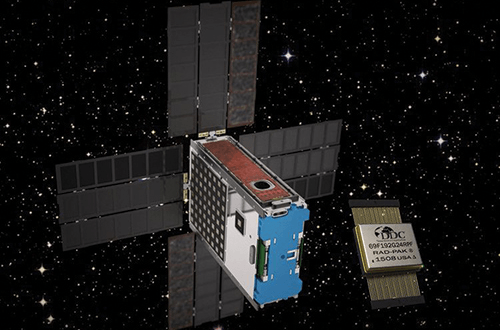
 SRAM leverages our proven commercial technology and architecture with
radiation-hardening, creating an efficient, high performance,
leading-edge memory at the 40nm technology node.” “The SigmaQuad


