Friday, February 16, 2024

Failed Weapons Programs the US Wasted the Most Capital On - 24/7 Wall St.

Army report: Military has spent $32 billion since ’95 on abandoned weapons programs


What is a failed weapon program?

A failed weapons program refers to a military project or initiative aimed at developing new weapons, military systems, or technologies that ultimately does not achieve its intended objectives or is terminated before reaching completion. There are several reasons why a weapons program might be considered a failure:

  1. Technical Challenges: Many weapons programs encounter technical difficulties during development, such as engineering problems, performance issues, or failures to meet design specifications. These challenges can lead to delays, cost overruns, or ultimately, the cancellation of the program.

  2. Cost Overruns: Weapons programs often involve significant financial investments, and cost overruns can occur when expenses exceed initial budget estimates. If a program's costs spiral out of control without achieving meaningful progress, it may be deemed a failure.

  3. Performance Issues: Even if a weapon system is technically feasible, it may fail to perform as expected in operational tests or real-world scenarios. If the system does not meet the military's requirements for effectiveness, reliability, or usability, it may be deemed unsuitable for deployment.

  4. Changing Strategic Priorities: Shifts in geopolitical dynamics, military strategy, or technology trends can render weapons programs obsolete or less relevant. If a program no longer aligns with the military's strategic priorities or needs, it may be terminated in favor of more pressing requirements.

  5. Political or Budgetary Factors: Weapons programs can become embroiled in political controversies, budgetary constraints, or bureaucratic disputes that undermine their viability. Political opposition, funding cuts, or changes in leadership can all contribute to the failure of a program.

  6. Ethical or Legal Concerns: Some weapons programs may face ethical or legal challenges, such as concerns about their humanitarian impact, compliance with international law, or potential for misuse. If a program's development or deployment raises significant ethical or legal objections, it may be terminated or curtailed.

Examples of failed weapons programs include the Strategic Defense Initiative (SDI) or "Star Wars" program of the 1980s, which aimed to develop a missile defense system but faced technical challenges and shifting strategic priorities. Similarly, the Comanche helicopter program in the early 21st century was canceled due to cost overruns and changing military requirements.

The latest casualty of cost growth, technical challenges, and shifting strategic priorities as a result of lessons learned on the Ukraine battlefields is Army's Future Attack Reconnaissance Aircraft (FARA) program. It was cancelled in February 2024 despite having spent a significant amount of money on its development. Here's what we know:

Total Spending:

  • At least $2 billion: According to various sources, including the Congressional Research Service (CRS), the Army had already spent at least $2 billion on the FARA program at the time of its cancellation.
  • Additional estimated costs: The program requested an additional $5 billion in funding for the next five years, suggesting the total planned expenditure could have reached approximately $7 billion.

Reasons for Cancellation:

The reasons for cancelling the program despite the invested funds were complex and multifaceted. Some key factors included:
  • Cost concerns: The program's budget had significantly increased from initial estimates, raising concerns about affordability.
  • Technical challenges: Development encountered technical hurdles that pushed back timelines and raised further cost concerns.
  • Shifting priorities: The Army decided to prioritize existing platforms and invest in newer technologies like unmanned aerial vehicles (UAVs) instead of pursuing a new manned helicopter.

If no or insufficient end items are produced, or goal achieved, this would generally be considered a failed program. However, this is not always true. For example the X-15 program failed to result in any production units, but from the beginning it was a joint Air Force, NASA R&D program. It cost $500 million (early 1970s) ≈ $3.2 billion to $5.3 billion (2024), but it is not called a failed program. 

The Pentagon is notorious for poor book-keeping, never having passed an audit, so the exact cost of the X-15 program is challenging to determine due to factors such as inflation, the involvement of multiple agencies (NASA, USAF), and the inclusion of various research and development activities.

While the X-15 program was relatively expensive, it provided invaluable data and insights into high-speed flight, aerodynamics, materials science, and human factors that contributed to the advancement of aerospace technology and paved the way for subsequent spaceflight programs, including the Space Shuttle program and beyond. A lot of this data went into the NASA public archive, where China used it to accelerate their hypersonic weapon systems, while the US chose not to pursue it.

Many programs originally intended to yield production of needed weapon systems which fail to produce, or blow up the price estimates can be defended in part for the lessons learned, but cost growth is a different lesson. The lesson could be that the requirement was poorly defined and understood, leading to floundering design approach. The lesson could be the the requirement was beyond the state of the art at the time. The lesson could be that the procurement system has failed by encouraging bait and switch, where the contractor has to bid low to get the job, and the service has to budget low to get Congressional buy-in.

If the military fights a war, and goals are not achieved, or the enemy is left in possession of the field at the end, that would be considered a failure. In that case, the Vietnam War, including VA costs, could be considered the biggest failure in national history. But is it a failure of the military systems, leadership, or national will, where we fought an enemy who cared more about winning than we did.

Program Start End Est Cost, Current billions
01. Joint Strike Fighter F-35A/B/C Lighning II 1993 2024 $1,700.0
02. KC-46 Refueling Tanker 2011 2019 $51.7
03. Strategic Defense Initiative +BMDO + MDA 1983 2024 $30.0
04. Zumwalt destroyer DD-21 DD(X) 1987 2024 $23.5
05. Project Nike 1957 1995 $20.0
06. Future Combat Systems 2003 2010 $20.1
07. Boeing-Sikorsky RAH-66 Comanche +LH-X 1991 2004 $8.0
08. NPOESS 1994 2012 $5.8
09. Littoral Combat Ships 1997 2024 $70.0
10. Universal Camouflage Pattern 2002 1905 $5.0
11. VH-71 Presidential Helicopter 1998 2009 $4.0
12. Expeditionary Fighting Vehicle (EFV) 1992 2011 $5.0
13. Transformational SATCOM (TSAT) 1999 2009 $8.0
14. JLENS Balloon 1998 2013 $1.5
15. XM2001 Crusader 1995 2002 $2.2
16. M247 Sergeant York 1978 1985 $3.0
17. Advanced SEAL Delivery System (ASDS) 1983 2008 $0.9
18. ARH-70A Arapaho 1992 2004 $1.2
00. World War II US costs 1941 1945 $10,000.0
00. Vietnam War +VA Costs 1965 1976 $3,200.0
00. B-29 Superfortress 1938 1954 $49.0
00. Manhattan Project A Bomb 1941 1945 $32.0

Failed Weapons Programs the US Wasted the Most Capital On - 24/7 Wall St.

247wallst.com

Samuel Stebbins

Special Report

Public Domain / Wikimedia Commons

The Department of Defense is one of the best-funded agencies in the U.S. government. With a current budget of 842 billion, it is also one of the largest defense budgets in the world by a wide margin. While much of the funding is put to good use, there is a portion each year that inevitably goes to waste, not intentionally or even through fraud or abuse, but through financing projects that ultimately go nowhere. 

To determine which weapons programs the U.S. wasted the most capital on, 24/7 Wall St. reviewed some of the weapons programs in recent decades. Programs are ranked on rough estimates of government expenditures, not adjusted for inflation. Among the weapons programs on this list, estimates of wasted capital range from hundreds of millions to tens of billions of dollars.

In most cases, the wasted money resulted from research and development projects that did not achieve their desired results. Notably, the fiscal 2023 military budget includes $130 billion for research and development – the highest amount ever allocated to research and development in a single year. (Here is a look at the newest aircraft in the U.S. Air Force.)

R&D will always carry some risk of waste with it but in many of the programs on this list, the wasted spending was often avoidable, resulting from any number of problems, including unrealistic goals, corporate influence in Washington, short-sighted strategic thinking, and evolving geo-political goals. Interestingly, several of these projects were initially pursued as a way of saving taxpayer money in the long term. 

It should be noted that while each of these weapons projects did not turn out as planned, not all of them were for nothing. In several cases, lessons and technological developments that emerged from them proved useful in other applications. (Here is a look at the 30 countries buying the most weapons from the U.S. Army.)

Here are failed weapons programs that the US wasted the most capital on

18. ARH-70A Arapaho

Source: Public Domain / Wikimedia Commons

  • Est. cost: $500 million

The 70A Arapaho armed reconnaissance helicopter was to be the replacement for the U.S. Army’s aging Bell OH-58D Kiowa Warrior, a special-purpose helicopter that had been in operation since the 1980s. The Army contracted Bell Helicopters to build the new choppers in 2005, with an order for 368 units to the tune of $2.2 billion.

Concerns over limited progress and rising expenses – as per-unit cost estimates nearly doubled from the original estimates – caused the Army to ultimately terminate the program in 2008 with only four prototypes to show for the project and an estimated half a billion dollars spent.

17. Advanced SEAL Delivery System (ASDS)

Source: Public Domain / Wikimedia Commons

  • Est. cost: $885 million

The Advanced SEAL Delivery System, or ASDS, was a mini-submarine specially designed by Northrop Grumman to transport Navy SEALs into combat areas. Though ASDS Boat 1 successfully completed key operational tests in Pearl Harbor in 2002, problems arose the following year when a Congressional Budget Office study cited several major problems, including noisy propellers and batteries that depleted faster than anticipated.

The rising costs led to the cancellation of orders for additional submarines in 2006, and in 2008, the existing mini-sub was so severely damaged by a fire that it was deemed too expensive to repair.

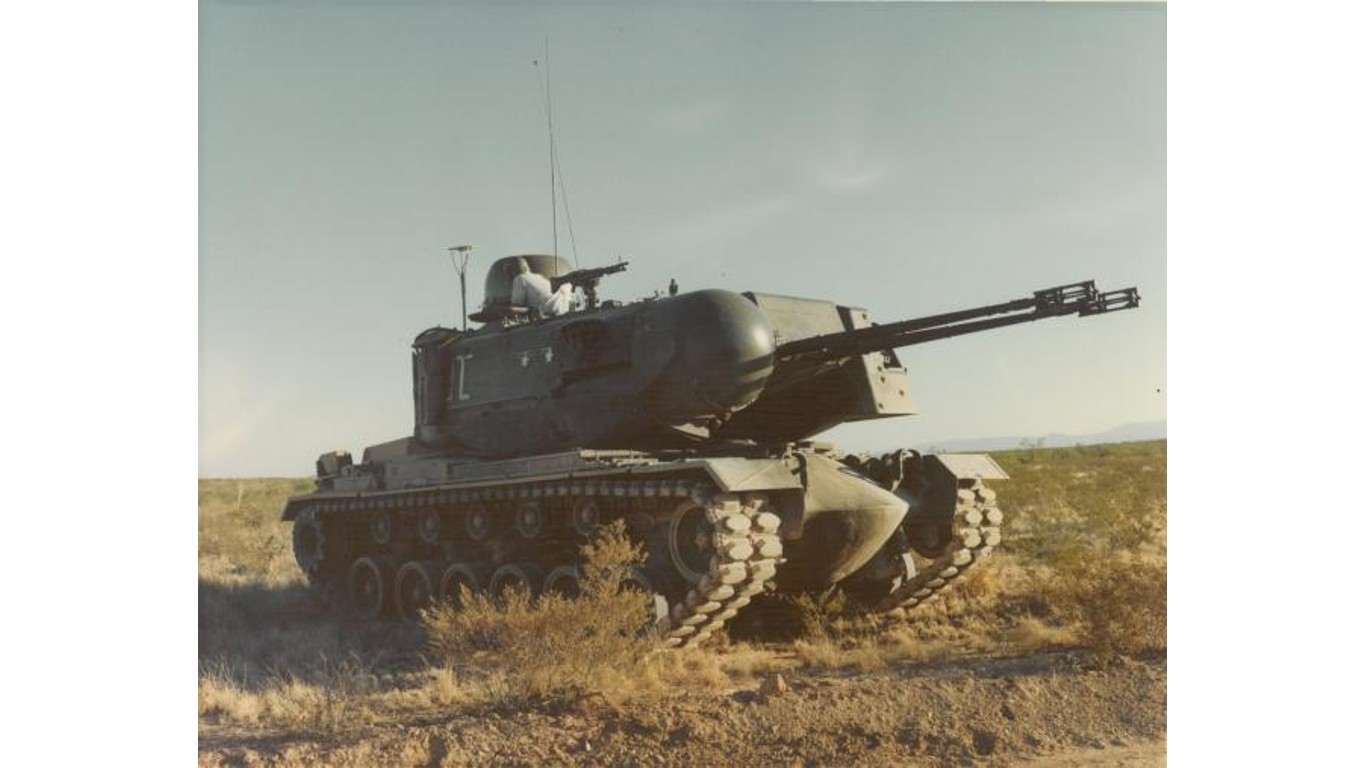
16. M247 Sergeant York
Source: Public Domain / Wikimedia Commons

  • Est. cost: $1.8 billion

In the late 1970s, the U.S. Army needed a drivable anti-aircraft system capable of traveling with tanks to protect them from attack helicopters. Two companies, defense contractor General Dynamics and automaker Ford, were awarded contracts to produce prototypes, and although by many accounts the General Dynamics submission was superior, Ford was ultimately awarded the development contract for between 276 and 618 vehicles.

There were many problems with Ford’s M247 Sergeant York, including slow target engagement times, failures in distinguishing between helicopters and trees, ineffective counter-countermeasures, and a top speed that could not match that of the tanks it was designed to protect. After only 50 vehicles had been built, the project was canceled in 1985.

15. XM2001 Crusader

Source: Public Domain / Wikimedia Commons

  • Est. cost: $2.2 billion

The XM2001 Crusader artillery system was intended to replace the M109 Paladin self-propelled howitzers that had been in use since the 1960s. The Crusader project was taken on by United Defense and General Dynamics in 1995, with plans to enter the system into service in 2008. The Crusader was well equipped with an automatic reloading 155 mm howitzer cannon capable of firing 10 rounds a minute as well as a 1,500 horsepower engine.

The project was ultimately canceled by the George W. Bush administration in 2002 due to the vehicle’s excessive weight, which gave way to mobility issues, as well as other shortcomings with the artillery system. Still, the venture was not a complete waste, as technologies that evolved from its development are used in other artillery systems today.

14. JLENS Balloon

Source: Public Domain / Wikimedia Commons

  • Est. cost: $2.7 billion

The Joint Land Attack Cruise Missile Defense Elevated Netted Sensor System, or JLENS, was effectively a radar blimp that was being designed to provide early warnings for any number of threats, including missiles, drones, and surface vehicles. Ultimately, however, it proved to be ineffective and expensive.

Problems with the system included its ability to distinguish between friendly and adversarial aircraft, communication software glitches, susceptibility to bad weather or enemy fire, and overall low reliability. Though there were several attempts to terminate the program, defense contractor Raytheon, which was awarded the project in 1998, lobbied successfully to keep it afloat until it was finally discontinued in 2017 – nearly 20 years and over $2.7 billion later.

13. Transformational SATCOM (TSAT)

Source: CatLane / E+ via Getty Images

  • Est. cost: $3.2 billion

Transformational Satellite Communications System, or TSAT, was an Air Force program that was envisioned as a secure, integrated communications network for the DOD, NASA, and the intelligence community. The program was canceled in 2009, however, as the Obama administration sought to reduce defense spending.

Though $3 billion had been invested in TSAT at the time of its cancellation, not all of it was fully lost, as many innovations that came out of the project proved useful and relevant for different applications.

12. Expeditionary Fighting Vehicle (EFV)

Source: usarmyccdc / Flickr

  • Est. cost: $3.3 billion

In the 1980s, the Marine Corps was seeking a replacement for its aging Assault Amphibious Vehicle, which had multiple weaknesses, including in its range and top speed. An ideal replacement would have a top speed of 25 knots on water and 45 mph on land, have a range of 500 kilometers, enough space for 17 fully armed troops – in addition to three crew members – and a 35mm gun with a stabilized turret. Defense contractor General Dynamics took on the project of meeting those specifications in what would be known as the Expeditionary Fighting Vehicle.

The vehicle was projected to achieve full operational capability by 2025. However, in 2011, the Marine Corps terminated the program, citing ballooning costs. The vehicles were also not ideal for use in post-9/11 combat missions, which were defined in part by IEDs and necessitated heavier armor that all but negated the vehicle’s advantages in water.

11. VH-71 Presidential Helicopter

Source: Public Domain / Wikimedia Commons

  • Est. cost: $3.0 billion

The 11 helicopters that comprise the fleet known as Marine One – those that shuttle the president of the United States – are well past their prime. Most are derivatives of the Sikorsky SH-3 Sea King, which has been in service since 1961. The Pentagon issued a request for proposal, or RFP, in 2003 in search of a replacement, and 2005 awarded the bid to Italian contractor AgustaWestland.

Only two years into development, costs were ballooning, and by 2008, initial estimates had nearly tripled. When the price hit $13 billion in February 2009, the program was canceled by the Obama administration. In total, the federal government spent an estimated $3 billion on research and development for the VH-71 Presidential Helicopter.

10. Universal Camouflage Pattern

Source: Erik S. Lesser / Getty Images News via Getty Images

  • Est. cost: $5.0 billion

The U.S. Army historically relied on two camouflage patterns for its uniforms: one for the desert and one for woodland environments – until 2004. That year, the Army switched to a single new uniform that bore a so-called Universal Camouflage Pattern, or UCP. The pattern quickly proved inadequate for use in Afghanistan and not optimal in nearly any other environment either. The $5 billion development of UCP was criticized further as many argued the money would have been better spent on vehicles and body armor.

Deemed a failure, UCP has now been replaced by a pattern known as Operational Camouflage Pattern, or OCP.

9. Freedom-class Littoral Combat Ships

Source: Public Domain / Wikimedia Commons

  • Est. cost: $5.0 billion

The U.S. Navy has announced plans to scrap all nine of its Freedom-class Littoral Combat Ships in fiscal 2023. The plan to scrap the ships is as the ships were designed to be at sea for 25 years, yet none of those on the chopping block are close to hitting that milestone, including five that are less than a half-decade old.

Though the ships have advanced technology, they have limited practical application and a problem-prone propulsion system. A failed anti-submarine mission package was also a factor. While the ships, manufactured by Lockheed Martin, cost $5 billion to build and outfit, their decommissioning will save a projected $4.3 billion in projected maintenance and upgrades.

8. NPOESS

Source: Public Domain / Wikimedia Commons

  • Est. cost: $5.8 billion

The NPOESS, or National Polar-orbiting Operational Environmental Satellite System, was a failed attempt at a civil-military weather satellite program. NPOESS’s functionality would include ozone mapping and infrared imaging. The program began during the Clinton administration as a way of combining the needs of the National Oceanic and Atmospheric Administration and the Air Force and ultimately be a cost savings. Overrunning its initial budget by billions of dollars, the program proved to be anything but.

Development of NPOESS was contracted to Northrop Grumman and after a series of delays and an estimated $5.8 billion spent, the Obama administration scrapped the project in early 2010, favoring two separate polar-orbiting systems, one civil and one military.

7. Boeing-Sikorsky RAH-66 Comanche

Source: sergerobert / Flickr

  • Est. cost: $6.9 billion

Following six years of planning at the height of the Cold War, the Army issued an RFP for an all-new, state-of-the-art helicopter in 1988. This new helicopter was to perform a multitude of functions, including attack, reconnaissance, and surveillance. It would also have stealth capabilities and be able to fly across an ocean. Ultimately, Boeing and Sikorsky were awarded the contract, and work began in 1991.

The Army ultimately wanted a fleet of 1,200 of these Comanche helicopters with delivery to begin in 1996 – a date that was pushed to 1997 and then 2002. The litany of problems included those associated with radar signatures, antenna performance, gun system function, target detection, software, and questions about whether the 10,000-pound helicopter could even get off the ground. When the project was scrapped in 2004 in favor of UAVs, or drones, it spanned 22 years and cost nearly $7 billion.

6. Future Combat Systems

Source: Public Domain / Wikimedia Commons

  • Est. cost: $18.1 billion

Future Combat Systems, or FCS, was an ill-informed concept involving an integrated set of both manned and unmanned vehicles that, at the time development began in 1999, was meant to be the cutting edge of battlefield technology for the 21st century. Ultimately, however, it culminated into little more than an $18 billion waste.

Poorly conceived initially, the project changed course following the terror attacks of Sept. 11, 2001, to better align with new military priorities. However, continued technical problems and rapidly rising costs, coinciding with expenditures during the Iraq War, proved insurmountable. By the time the project was canceled in 2009, eight prototype vehicles were all the FCS had yielded.

5. Project Nike

Source: Public Domain / Wikimedia Commons

  • Est. cost: $20.0 billion

In hindsight, much of the Cold War arms race between the United States and the Soviet Union was a waste of taxpayer money, to say nothing of the inherent risk of nuclear weapon proliferation. One example of potentially wasteful spending in the U.S. during the Cold War was Project Nike – an initiative to build batteries of two or three anti-aircraft missiles around key cities and military sites across the country.

There were over 200 Nike surface-to-air missile sites across the country in 1963 ready to eliminate any threat a Soviet bomber might pose. However, by the 1970s and the widespread adoption of intercontinental ballistic missiles, the Nike sites were effectively rendered obsolete, having never once been used. In the brief period that the Nike program theoretically acted as a defense system against a Soviet attack, the Pentagon spent an estimated $20 billion or more on the project. What’s more, six soldiers and four civilians were killed when an Ajax missile exploded at a New Jersey Nike site in 1958. Today, Nike sites are either abandoned or have been repurposed.

4. Zumwalt destroyer

Source: usnavy / Flickr

  • Est. cost: $23.5 billion

The Zumwalt DDG-1000 class destroyer is one of several examples on this list of a conceptual vision that lay beyond the reach of what was practical or achievable. The destroyer was intended to be a land attack vessel with a minimal radar presence and highly advanced weapons, requiring a small crew thanks to automation. However, its weapons systems have proved to be less effective than anticipated, while its radar presence was greater than the less expensive Ohio-class cruise missile submarine.

Additionally, the destroyer required over 50% more crew than initially promised. Even the ship’s advanced hybrid propulsion system has presented challenges, as the first DDG-1000 broke down in the Panama Canal in 2016. The Navy initially sought to commission 32 DDG-1000s to replace the Arleigh Burke-class destroyer. Now, production will end after just three ships – each of which cost $4.5 billion, on top of the $10 billion in initial development.

3. Strategic Defense Initiative

Source: Public Domain / Wikimedia Commons

  • Est. cost: $30.0 billion

One of the most controversial – and expensive – investments made in the interest of national security was the Strategic Defense Initiative, or SDI. Announced by President Ronald Reagan in 1983, SDI was to be a network of lasers in outer space that would protect the United States from any attack from a Soviet-launched nuclear ICBM.

Derisively known as Star Wars, the program was ridiculed for the litany of technical hurdles, many of which were thought to be insurmountable by experts. The program was never fully realized, and by the time it was sidelined by President Bill Clinton in 1993, the government had poured an estimated $30 billion into it.

2. KC-46 Refueling Tanker

Source: my_public_domain_photos / Flickr

  • Est. cost: $4.6 billion

The KC-46 Refueling Tanker is a fixed-wing aircraft manufactured by Boeing. It is one of several aircraft on this list to have seen its full deployment delayed by technical problems. The aircraft has several deficiencies classified as category 1, a Pentagon term reserved for the most serious technical problems.

At least two of the issues are with the plane’s remote vision system, which does not function properly in all conditions and is essential for mid-air refueling. Boeing has agreed to redesign the system at no charge to the U.S. taxpayer. The Air Force, meanwhile, is using federal money to fix the aircraft’s service actuator, which does not meet specifications to refuel certain key aircraft. Currently, the aircraft will not be deployed in combat for anything short of an emergency, and full-rate production is delayed until at least 2024. Cost overruns have already nearly matched the initial contract amount of $4.9 billion.

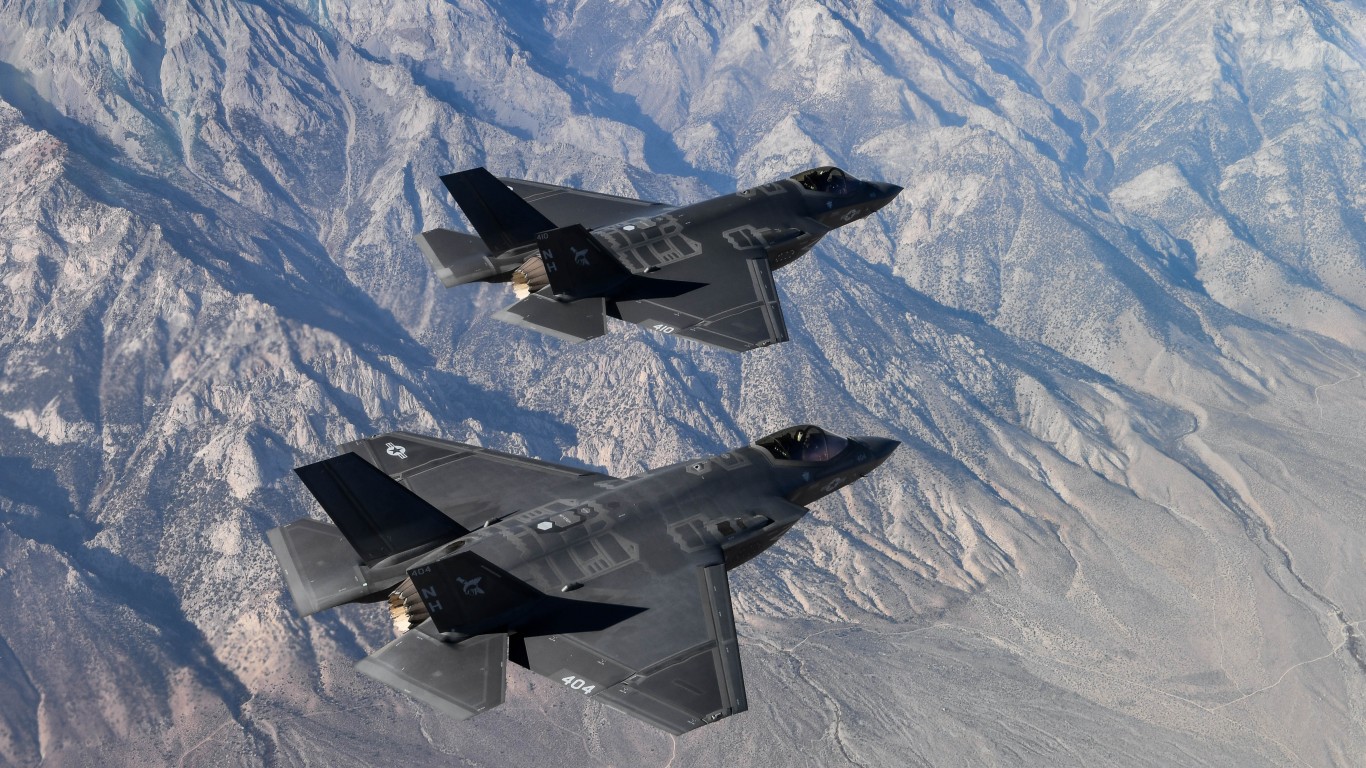
1. F-35
Source: usnavy / Flickr

  • Est. cost: $1.7 trillion

The F-35 is a multi-role combat aircraft manufactured primarily by Lockheed Martin. A fifth-generation fighter, the F-35 is the result of a program launched in 2001 and is intended to be a single-unit replacement for a wide range of aging inventory, including F-18s, F-16s, Harriers, and F-22s – and ultimately a cost savings for the Pentagon. However, the do-it-all aircraft may have proven to be a bit of a reach conceptually, and the program’s lifetime cost, from research and development to operation and fleet maintenance is projected to hit $1.7 trillion.

The program to develop the F-35 has been plagued with problems from the start. Problems include part failures, software glitches, damage to the aircraft when firing the main gun, and at least one incident of a jet catching fire on the runway before take off. Though the jet has some impressive capabilities, and over 800 have been delivered to customers worldwide, its usage will likely be far more limited than initially anticipated.

How To Get Ahead in 2024 (sponsored)

Finding a good financial advisor may be the key to getting ahead in 2024. Whether it’s planning for retirement, college, or that 20ft boat, they can help you navigate the ups and downs of the market to achieve success.

Use the advisor match tool below, or click here now, to find your financial freedom!

Thank you for reading! Have some feedback for us?
Contact the 24/7 Wall St. editorial team.


(1) The US Navy's Wild Plan to Defeat China - YouTube


The US Navy's Wild Plan to Defeat China - YouTub
e

Sir Julian Corbett (right) believed that interdiction of maritime commerce was a powerful strategy of war, but his theories show he lacked an understanding of how trade interdiction would have multiple-order consequences.

Alfred Thayer Mahan (left) had a keen understanding of the globalized economy and how interdicting maritime commerce could paralyze economies ashore.

US Navy's Modernization: Balancing Mahan and Corbett's Influence

The US Navy is at a critical juncture, facing a challenging rivalry with China's expanding naval power primarily in the Indo-Pacific, as well as problems at major maritime choke points such as the Red Sea and Panama Canal. This should lead to Revisiting Corbett and Mahan. 

With only 290 vessels compared to China's 370 and an expected increase to 475 by 2035, and a significant shortfall in shipbuilding industrial infrastructure, the US Navy seeks to modernize and address its mission and resource allocation. The theories of naval historians and strategists Alfred Thayer Mahan and Sir Julian Corbett, who influenced naval policies for over a hundred years, come into play as the US Navy debates the correct number, type, and mission for its warships. 

Alfred Thayer Mahan

Alfred Thayer Mahan (1840–1914) was a renowned American naval officer, historian, and strategist whose ideas profoundly influenced naval strategy and international relations in the late 19th and early 20th centuries. His major works and theories include:

  1. "The Influence of Sea Power upon History, 1660–1783" (1890): This seminal work is Mahan's most famous contribution to strategic thought. In it, he argues that naval power was the crucial factor in shaping the course of history during the 17th and 18th centuries. Mahan emphasizes the importance of maritime commerce, naval strength, and the control of key sea routes in determining the rise and fall of nations. He contends that nations with strong navies could control vital trade routes, project power globally, and secure their economic and military interests

  2. "The Influence of Sea Power upon the French Revolution and Empire" (1892): This work extends Mahan's analysis of naval power into the Napoleonic era, exploring how sea power shaped the rise and fall of Napoleon Bonaparte's empire. Mahan emphasizes the British Royal Navy's blockade of France and its impact on Napoleon's ability to conduct maritime trade, project power overseas, and sustain his continental ambitions.

Naval Strategy and Sea Power Doctrine: Mahan's theories on naval strategy emphasized the significance of sea power for national security and prosperity. He advocated for the construction of powerful, modern navies capable of asserting control over strategic maritime regions. Mahan's ideas influenced the naval arms race among major powers in the late 19th and early 20th centuries, particularly the United States, Great Britain, Japan, Italy, and Germany. The Washington Naval Treaties, between the wars,  tried to rein in the arms race, but may in some ways have brought on World War II sooner. The US and European globalization of commerce, at the same time offshoring most of their maritime ship construction and merchant marine to a few global shipping companies under flags of convenience has resulted in a very fragile global economy.

Strategic Geography: Mahan stressed the importance of geographic factors, such as the control of key chokepoints, harbors, and naval bases, in shaping maritime strategy. He emphasized the strategic significance of regions like the Caribbean, the Mediterranean, and the Pacific Ocean in global geopolitics. Choke points continue to be critical in modern seapower, e.g., Suez Canal/Red Sea; Panama Canal; Straits of Gibraltar; Straits of Mallaca; Bering Straits.

Influence on Naval Policy: Mahan's ideas had a profound influence on naval policies and strategies adopted by major powers, including the United States, Britain, Germany, and Japan. His emphasis on the importance of naval supremacy and the control of strategic sea lanes contributed to the expansion of naval capabilities and the development of naval doctrines worldwide.

China seems to have finally taken Mahan's theories to heart.  Under the Ming emperor, between 1405 and 1433, Zheng He led seven major expeditions, commanding the largest armada the world would see for the next five centuries. Not until World War I did the West mount anything comparable. After victory in the Chinese Civil War, Mao tried to pursue his enemies onto Taiwan, but was stopped by the US having a Navy, and China not having a Navy. The current Chinese Communist Party (CCP) People's Liberation Army Navy seems determined to rectify that deficiency, and go beyond with the "Belt and Road initiative" to control trade world wide.

Alfred Thayer Mahan's theories continue to be studied and debated by scholars of naval history, strategic studies, and international relations, shaping contemporary discussions on maritime strategy and geopolitical competition.

Sir Julian Stafford Corbett

Sir Julian Stafford Corbett (1854–1922) was a British naval historian and strategist whose works significantly influenced naval thought and military strategy. His major works and theories include:

  1. "Some Principles of Maritime Strategy" (1911): This seminal work is considered one of the most important contributions to naval strategy and theory. In it, Corbett outlines his principles of maritime strategy, emphasizing the importance of understanding the political context of naval operations and the need for a flexible, balanced approach to sea power. Corbett's ideas contrasted with those of Alfred Thayer Mahan, as he focused more on the strategic use of naval forces in support of broader political objectives rather than emphasizing the decisive battle.

    • Nature and Scope of Maritime Strategy: Corbett begins by defining maritime strategy as the art of devising plans and actions to control the sea for the benefit of one's own country. He emphasizes the importance of understanding the broader political context within which naval operations occur.

    • Objective of Naval Warfare: Rather than focusing solely on achieving naval supremacy or winning decisive battles, Corbett argues that the primary objective of naval warfare should be to influence events on land and compel the enemy to accept one's own terms. Naval power is a means to achieve political ends.

    • Principles of Sea Control: Corbett identifies two main principles for achieving control of the sea: command of the sea and denial of the sea to the enemy. Command of the sea involves establishing superiority over the enemy's naval forces, while denial involves preventing the enemy from using the sea for their purposes.

    • Importance of Economic Warfare: Corbett stresses the significance of economic warfare, including blockade and commerce raiding, as effective means of exerting pressure on the enemy and undermining their ability to sustain their war effort.

    • Flexibility and Adaptability: Corbett emphasizes the need for flexibility and adaptability in naval strategy. He argues against rigid plans and advocates for strategies that can respond to changing circumstances and exploit opportunities as they arise.

    • Cooperation with Other Forces: Corbett highlights the importance of coordination and cooperation between naval forces and other military services, as well as diplomatic and political agencies. Joint operations and a comprehensive approach to strategy are essential for success.

    • Preparation and Training: Corbett stresses the importance of preparation and training in maintaining a capable and effective naval force. He emphasizes the need for continuous learning and improvement to stay ahead in the ever-changing strategic environment.

  1. England in the Mediterranean (1904): This book examined British naval policy and strategy in the Mediterranean region, highlighting the complexities of maintaining maritime dominance in key strategic areas.

  2. Naval Operations (1913): This work delved into historical naval campaigns, analyzing the strategies and tactics employed by various naval commanders throughout history. Corbett's analysis provided valuable insights into the principles of naval warfare.

Corbett's views on naval strategy can be summarized as follows:

  • Importance of Control of the Sea: Corbett believed that control of the sea was essential for a nation's security and prosperity. He argued that naval power could secure vital trade routes, protect overseas territories, and project influence globally. In the age of globalization this seems even more true.
  • Flexibility and Adaptability: Unlike some contemporaries who emphasized decisive battles, Corbett stressed the importance of flexibility and adaptability in naval strategy. He advocated for a strategy that could respond to changing circumstances and achieve political objectives rather than seeking purely military victories. In the Nuclear age, where final victory may never be achieved without world destruction, flexibility is more important than ever.
  • Economic Warfare: Corbett recognized the significance of economic warfare, including blockade and commerce raiding, in naval strategy. He understood that disrupting an enemy's trade could be as effective as direct military confrontation in achieving strategic goals. The current situation in the Red Sea and the Panama Canal show this to be true.
  • Importance of Political Ends: Corbett stressed the connection between naval strategy and political objectives. He argued that naval operations should serve the broader goals of national policy and diplomacy, rather than pursuing naval supremacy for its own sake. Corbett's emphasis on the political context of maritime strategy influenced subsequent generations of strategists and policymakers. Clausewitz goes to sea.
  • Limited Naval Warfare: Unlike Mahan, who advocated for decisive battles and the annihilation of the enemy fleet, Corbett emphasized the importance of limited naval warfare and the use of naval forces to achieve specific political objectives. He argued that naval power could be used to control sea lanes, support amphibious operations, and blockade enemy commerce, without necessarily seeking a decisive engagement. This means many smaller ships, not a few large.
  • Historical Analysis: Corbett's works were deeply grounded in historical analysis, drawing lessons from naval history to inform contemporary strategy and practice. He examined historical examples of naval campaigns and operations to illustrate principles of maritime strategy and highlight the importance of adaptation and innovation in naval warfare. History never repeats, but it is always the same.
  • Influence on British Naval Policy: Corbett's ideas had a significant impact on British naval policy and strategic thinking in the years leading up to World War I. His emphasis on the political context of naval operations and the importance of a balanced fleet structure influenced debates within the Royal Navy about fleet composition, force deployment, and strategic priorities. In many ways, the current world situation seems to have devolved back to this era.
  • Cooperation with Other Services: Corbett emphasized the importance of cooperation between naval and other military services, as well as diplomatic and political agencies. He believed in a holistic approach to strategy that integrated naval power with other instruments of national power. Jointness before it was a thing.

Legacy: Corbett's theories continue to be studied and debated by scholars of naval history and strategy, and his emphasis on the political dimension of maritime strategy remains relevant in contemporary discussions of naval affairs and international security. His works continue to be influential in shaping strategic thinking and policy development in maritime nations around the world. Overall, Corbett's works laid the foundation for modern naval strategic thought, emphasizing the importance of flexibility, adaptation, and the pursuit of political objectives in maritime affairs.

Global Context

In a global context, the US Navy's mission extends beyond its adversaries, trying to meet 44% of combatant commanders' requests worldwide in 2015, with an additional 150 ships needed. Despite the ongoing debate, the Navy has released a force structure goal to increase the fleet to 355 ships by 2042, starting with 285 ships by 2026 and gradually growing thereafter. 

The Navy's modernization, however, is a long-term and resource-intensive process, and building and designing the force structure to protect national interests or achieve specific diplomatic goals remains a priority. In response to China's anti-ship missile capabilities, the US Navy is considering a more distributed approach to naval firepower, with new missiles across more platforms and the return of the frigate class.


US Navy's Shipbuilding Challenges and Plans for the Future

 ‘It’s not about numbers’ in shipbuilding race with China: Chief of Naval Operations Adm. Lisa Franchetti said “it’s not about numbers” when asked about China’s shipbuilding capacity relative to the United States, a preview of the service’s likely talking points later this year when the newly installed CNO faces tough budget questions on Capitol Hill. She doesn't seem to think Mahan and Corbett still apply.

The Navy’s shipbuilding capacity, and more pointedly, the number of ships in the fleet, has become a political football in recent years with Congress during the Trump administration setting 355 as a minimum number of ships that the Navy is required to maintain. The current fleet hovers between 295 and 305 vessels depending on the timing of retirements and commissionings during a given year.

The US Navy faces a significant issue with its shipbuilding capability, primarily due to a shortage of skilled labor. This labor shortage has led to delays, cost overruns, and accidents in shipbuilding, maintenance, upgrades, and decommissioning projects. 

Currently, there are only seven operational shipyards in the country, owned by four prime contractors, while China operates 20 shipyards for military modernization. To address this challenge, the Navy has initiated a $21 billion modernization program for the four major public shipyards. Additionally, there are plans to package production contracts with Workforce Development funding to train the next generation of shipbuilders. 

The Navy has presented three alternative approaches to expanding the Battle Force by 2045, focusing on large Next Generation surface combatants, undersea vessels, or a mix of both. The Navy is also counting on unmanned platforms, such as drones and uncrewed vessels, to augment its battle fleet by 2045. 

Despite the systemic challenges, the US Navy aims to maintain its strong presence and capabilities, relying on firepower, tactics, and alliances to counter the numerical advantage of the People's Republic of China. The Navy's history shows that underestimating its capabilities can be perilous for other nations. While critics argue that the US Navy should have acted sooner to address the production gap, there is confidence that the Navy will remain a formidable force.


Tuesday, February 13, 2024

Ukraine highlights VAMPIRE new defense weapon against UAVs

Army Recognition Global Defense and Security news
L3Harris VAMPIRE Counter-Unmanned Air Vehicle (UAV) weapon system developed by L3Harris specifically for Ukraine. (Picture source: Army Recognition)

 Ukraine highlights VAMPIRE new defense weapon against UAVs | Ukraine - Russia conflict war 2022 | analysis focus army defence military industry army

The Ukrainian Navy's press service recently broadcast footage demonstrating the air defense forces' effectiveness, featuring the first combat use of a Counter-Unmanned Air Vehicle (UAV) weapon system developed by L3Harris specifically for Ukraine.

Ezoic


In the shared video, a kamikaze drone, identified as the Shahed-136 from Russia, was intercepted and destroyed by a laser-guided rocket from the BAE laser guided rocket Advanced Precision Kill Weapon System (APKWS), deployed using the Vampire weapon system.

The VAMPIRE (Vehicle-Agnostic Modular Palletized ISR Rocket Equipment) system is an innovation by L3Harris, aimed at enhancing defense capabilities against aerial and ground threats through laser-guided weapon systems like the APKWS or other laser-guided munitions. This technology is noted for its portability and modularity, allowing for quick installation on most vehicles with a cargo space.

The modular and palletized design of the VAMPIRE system facilitates easy integration on various vehicle types, whether tactical or non-tactical, offering a rapid, cost-effective, and efficient weapon deployment solution. The system can be tailored to specific customer needs, incorporating different sensors and weapon packages based on mission requirements. Notably, the system is designed to be fully autonomous, incorporating a power system that negates the need for a 24-volt alternator on the carrying vehicle.

The inclusion of APKWS or other laser-guided munitions enhances the capability to precisely strike enemy drones and ground threats, enabling special forces and light units to quickly engage targets beyond the range of conventional weapons. VAMPIRE is also equipped with the WESCAM MX-10 RSTA stabilized independent sighting system, offering reconnaissance, surveillance, and target acquisition (RSTA) capabilities with high-definition (HD), multi-sensor, and multi-spectral support for long-range missions.

L3Harris developed a prototype of the VAMPIRE system in 2021 and began field testing within the same year. Following range and durability tests, an advanced prototype was presented to the US Department of Defense in 2022, successfully demonstrating its capabilities at the Special Operations Forces Industry Conference (SOFIC) in Tampa, Florida.

In January 2023, L3Harris secured a $40 million contract from the Department of Defense to supply 14 VAMPIRE systems to the Ukrainian security forces as part of a $3 billion security assistance package from the US government. Four VAMPIRE systems were delivered in mid-2023, with the remaining ten scheduled for delivery by the end of the year. These systems, intended to protect Ukraine's civilian infrastructure against drone attacks and ground threats, will be equipped with APKWS.

Compared to other anti-drone solutions like electronic warfare systems or surface-to-air missile systems, Vampire stands out for its affordability and assembly simplicity. By the end of last year, the United States had delivered all 14 units of this system under contract, strengthening Ukraine's defense against aerial attacks.


Advanced Weapons Proliferate in Africa - Rwanda army using Chinese AFV and MANPADS SAM in east DR Congo

Thousands of people have fled the upsurge in fighting between M23 rebels and DR Congo government forces © Aubin Mukoni


  • Rwanda accused of supplying M23 rebels with Chinese-made missile systems in Eastern Congo 

Rwanda has been accused of providing M23 rebels with Chinese-made missile systems in Eastern Congo, according to a UN report and intelligence from France. These sophisticated weapons, including service-to-air missiles, were reportedly used to fire at a United Nations observation drone last week. The Rwandan Army's suspected wz 551 six-wheeled infantry fighting vehicles, equipped with radar and missile launcher systems, were identified in the region. 

No other country in East Africa, except Tanzania and Kenya, has these systems, but they don't use the radar-mounted versions like Rwanda. The radar in these vehicles helps track planes by throwing radar signals and calculating reflected objects, while the laser locator guides the missile to the targeted plane. 

Rwanda's intention, as claimed by the people in the Ruru and Kanga districts, is to prevent proof of their second phase of war in Congo. Recent sightings of 11 Japanese Mitsubishi or Isuzu F ORS trucks, filled with M23 rebels and Ugandan soldiers, support this claim. 

MONUSCO, the United Nations Organization Stabilization Mission in the Democratic Republic of the Congo, has never reported non-armed groups possessing or operating mobile service-to-missile systems due to the extensive training, money, and resources required. These systems, costing approximately $110,000 per missile, are unlikely to be provided to rebel groups without proper operational knowledge. The vehicle in question was reportedly seen in Kanga, moving south towards Sake, indicating a possible threat to UN peacekeeping mission jets.

  • Arming of M23 and Rwandan forces: A cause for concern in Congo 

Paul Kagame, the Rwandan President, has obtained advanced weaponry, including anti-aircraft guns and man-portable air defense systems (MANPADS) sourced from China. These arms are similar to those used by Kagame in 1994 to shoot down a plane carrying structured the Rwandan president, triggering the genocide. The same weapons are now in the hands of M23 rebels, leading to intense fighting in the Congolese town of Sake. 

With Kagame backing the M23, there are fears of a looming conflict between Rwandan, Ugandan, and Congolese forces. Local residents are advised to evacuate the town to ensure their safety. The allegations of assassination plots against Congo's President Felix Tshisekedi and Kagame's disregard for consequences can further exacerbate the regional tensions due to his support from countries like the United States and the United Kingdom, driven by Congo's mineral resources.

Rwanda army using SAM missiles in east DR Congo: UN report


Rwanda army using SAM missiles in east DR Congo: UN report

Goma, Dr Congo (AFP) Feb 12, 2024

The Rwandan army supporting M23 rebels in an escalating conflict in eastern DR Congo is using sophisticated weapons such as surface-to-air missiles, according to a UN document seen by AFP on Monday.

Amid intensifying fighting in the Democratic Republic of Congo (DRC), a "suspected Rwandan Defence Force (RDF) mobile surface-to-air missile (SAM)" was fired at a UN observation drone last Wednesday without hitting it, the confidential report said.

The WZ551 (AKA the ZSL92 is a Chinese wheeled armored personnel carrier, not a mobile SAM carrier. It is actually consisted of two families of vehicles with official designations in the People's Liberation Army as Type 90 and Type 92. Roughly 900 WZ551s are in service with the PLA, where they are used by light mechanized infantry units. WZ551s have been exported to Algeria, Bosnia, Sri Lanka, Nepal and Pakistan. It's possible they attached a MANPADS launcher atop it.


"External military intelligence from France supports assessment that the suspected WZ551 6x6 IFV mobile SAM system is Rwandan," it added.

Two aerial images attached to the report show a six-wheeled armoured vehicle with a radar and missile launcher system on the roof.

The photos were taken by the targeted drone about 70 kilometres (44 miles) north of the city of Goma, in rebel-held Rutshuru territory.

The UN's MONUSCO peacekeeping mission said in the document it had "no past reporting of known armed groups possessing the training, capital or resources to operate and maintain a mobile SAM system".

It added that it "indicates an escalation of conventional force conflict in eastern DRC".

The document notes that M23 and the Rwanda army have used numerous weapons against aircraft and also have in their armoury anti-aircraft guns and MANPAD mobile air defence systems.

Such weapons pose a high risk to all DRC government and UN aircraft in the region, the document states.

In late January, M23 spokesman Willy Ngoma appeared in a video on social media threatening MONUSCO with reprisals and accusing it of supplying "enemies" with information about rebel activity gathered by drones.

Ngoma shows what he said was debris from a CH-4 drone flown by DRC forces and shot down by a rebel.

The DRC, the UN and Western countries say Rwanda is supporting the rebels in a bid to control vast mineral resources, an allegation Kigali denies.

Clashes have intensified recently between the M23 -- among the strongest of dozens of armed groups roaming the troubled east -- and the Congolese army.

Regional army spokesman Lieutenant-Colonel Guillaume Ndjike said army "battalions and material" had arrived in the area "for the security of the population and to recapture territory".

The flare-up has pushed thousands of civilians to flee the town of Sake, on the route towards Goma, capital of North Kivu province.

At least three people died and a dozen were wounded on Monday when a "bomb" fell on a camp for the displaced near Goma, local sources said.

The Sake region, 20 kilometres (12 miles) west of the city, saw heavy fighting during the day.

A civil society source accused M23 of hitting the Zaina camp. "There were five killed and 15 hurt," the source said.

A medical source reported that three of 18 casualties had died.

Communications Minister Patrick Muyaya accused the Rwandan army of "firing the bomb in the early evening" and listed eight people seriously injured.

"On the hills the explosions are terrible," said a local witness, adding that armoured UN vehicles had been stoned by youngsters accusing the peacekeepers of "collaborating with the enemy".

- Protests target embassies, UN -

The UN forces have been in DRC for nearly 25 years, but stand accused of failing to protect civilians from armed groups.

The UN Security Council voted in December to accede to Kinshasa's demand for a pullout despite the volatile situation.

DRC authorities on Monday stepped up security outside embassies and UN buildings after they were targeted by protesters accusing the West of supporting M23.

Protests broke out last week in Kinshasa and the southeastern city of Lubumbashi.

On Friday, dozens of youths demonstrated outside the French and British embassies and earlier in the week, in front of the US embassy.

The government announced tighter security for embassies late on Sunday and policing had been increased at several sites in the capital on Monday.

Dozens of youths were also gathering for new marches and had burnt tyres on the pavement.

As a precaution, foreign schools were closed on Monday morning, as well as some shops in the centre of Kinshasa.

The M23 has seized vast swathes of North Kivu since emerging from dormancy in late 2021, in an area wracked by violence for decades following regional wars in the 1990s.


Monday, February 12, 2024

Antenna system for trilateral drone precise vertical landing


Antenna system for trilateral drone precise vertical landing

This article presents a radio frequency system that can be used to perform precise vertical landings of drones. The system is based on the three-way phase shift detection of a signal transmitted from the landing point.

The antenna system is designed by taking into account parameters such as landing tracking area, analog-to-digital converter (ADC) resolution, phase detector output range, antenna polarization, and the effect of antenna axial ratio.

The fabricated prototype consists of a landing point antenna that transmits a signal at 2.46 GHz, as well as a drone triantenna system that includes a phase shift detection circuitry, ADC, and a simple control program that provides the correction instructions for landing. The prototype provides an averaged output data rate (ODR) suitable for landing maneuvers (>300 Hz).

A simple system calibration procedure (detector output zeroing) is performed by aligning the antenna system. The measurements performed at different altitudes demonstrate both the correct operation of the proposed solution and its viability as an instrument for precision vertical landings.
Comments: The paper has been accepted by IEEE Transactions on Instrumentation and Measurement, vol. 71, pp. 1-8, 2022
Subjects: Systems and Control (eess.SY)
Cite as: arXiv:2402.06011 [eess.SY]
  (or arXiv:2402.06011v1 [eess.SY] for this version)
  https://doi.org/10.48550/arXiv.2402.06011

Journal reference: IEEE Transactions on Instrumentation and Measurement, vol. 71, pp. 1-8, 2022
Related DOI: https://doi.org/10.1109/TIM.2022.3196949

Submission history

From: Pedro Quintana-Morales Dr [view email]
[v1] Thu, 8 Feb 2024 19:15:03 UTC (6,834 KB)

 Summary

Here are the key points from the document:

  • The paper presents an antenna system and associated control system for precision vertical landing of drones. It builds on prior work proposing a triangular phase shift detection approach.
  • The antenna system consists of a circularly polarized transmitting antenna on the landing point and three linearly polarized receiving antennas on the drone in a triangular configuration. This avoids amplitude variations during drone rotation.
  • Design considerations include tracking area, ADC resolution, antenna polarization and axial ratio, detector output range, etc. A prototype is built and tested using patch antennas, Arduino controller, and commercial phase detector.
  • The prototype demonstrates robust performance for landing maneuvers with high output data rate (>300Hz), suitable dynamic range (28dB), and proper functioning from 220cm height down to near field.
  • A simple calibration procedure is proposed to zero the detector outputs and compensate for phase errors from hardware. This avoids needing external RF generators for calibration.
  • Overall, the prototype demonstrates the viability of the triangular phase shift approach for precision vertical landing of drones, addressing implementation aspects absent from prior theoretical work.

Authors

Based on the author information in the paper:

The authors have collaborated on various Spanish and European research projects.

They cite their own prior theoretical work on the triangular phase shift detection approach for drone precision landing in the paper (reference [13]). So this current paper builds on their previous proposal by implementing and testing a prototype system.

  • Víctor Araña-Pulido is an Assistant Professor at the University of Las Palmas de Gran Canaria (ULPGC). He is part of the Institute for Technological Development and Innovation in Communications (IDeTIC) there. His research interests include nonlinear microwave circuits and control systems.
  • Eugenio Jiménez-Yguacel is an Associate Professor at ULPGC and part of IDeTIC. His work focuses on antenna and microwave circuit design, and digital communications.
  • Francisco Cabrera-Almeida is an Assistant Professor at ULPGC and member of IDeTIC. His interests include electromagnetic modeling and radiowave propagation.
  • Pedro Quintana-Morales is an Assistant Professor at ULPGC and member of IDeTIC. His work involves signal processing and data analysis.

Artifacts

The paper mentions the following artifacts related to the precision landing system prototype:

  • Drone tri-antenna array: This consists of 3 linearly polarized patch antennas spaced 7cm apart in a triangular configuration, designed and fabricated by the authors.
  • Landing point antenna: A circularly polarized patch antenna operating at 2.46 GHz, designed and fabricated by the authors.
  • Phase detector circuitry: Uses a commercial integrated circuit (Analog Devices AD8302) to detect phase shifts between antenna signals.
  • Control board: Uses an Arduino Uno microcontroller board to read phase detector voltages via ADC and generate flight control instructions.
  • Control program: Algorithm implemented on the Arduino to calibrate the system, read voltages, determine position sector, and output flight maneuver commands. The flow diagram is provided.
  • Sectorized chart and wheeled base: Used during experimental evaluation to move landing point antenna to different sectors and distances.

The specific antenna designs, detector circuit schematics, Arduino code, and sectorized chart are not provided in detail within the paper. But the text and block diagrams give an overview of the key hardware and software components designed by the authors as part of the prototype system.

Performance

The paper does not provide specific quantitative results for the landing accuracy achieved by the prototype system. However, some insights can be gleaned from the details provided:

  • The system is designed to provide flight corrections based on continuous tracking of phase shifts between antenna signals as the drone approaches the landing point.
  • The antenna spacing of 7cm was chosen to allow phase shift detection corresponding to drone movements as small as 0.746cm using the 10-bit ADC.
  • The system was tested down to heights of 1.8cm above the landing point antenna, suggesting it can guide the drone with precision in close proximity.
  • The high output data rate (>300Hz) enables real-time course corrections.
  • Performance was validated across tracking areas from 7-110cm radii, demonstrating precision guidance over a range of Approach distances.

While no specific landing error measurements are reported, the high resolution tracking capability down to millimeter displacements, fast update rate, and testing at very close distances indicates the system can likely achieve high precision landing, perhaps within a few centimeters. But further quantitative evaluation would be needed to confirm the actual landing accuracy attainable.


Synthetic Aperture Radar Drone Gets Interferometric Imaging | Hackaday

Synthetic Aperture Radar Drone Gets Interferometric Imaging | Hackaday Backyard Coherence: A €1,000 Drone SAR Achieves Repeat-Pass Interfero...