Wednesday, October 16, 2024

Satellite Constellation Projects Ready For Takeoff | ZeroHedge

Infographic: Satellite Constellation Projects Ready for Takeoff | Statista
This chart shows major satellite constellation projects currently being deployed worldwide, by number of (active) satellites.

Infographic: Satellite Constellation Projects Ready for Takeoff

Katharina Buchholz,

satellite constellation projects

International competition is intensifying for the deployment of satellite constellations into orbit. Satellite constellation - the most well-know being SpaceX's Starlink - are designed to provide high-speed global Internet access.

Artist’s illustration of the distribution of satellites in SpaceX’s Starlink network (image credit: SpaceX)

Starlink, launched
in 2019, had more than 6,300 satellites in service at the beginning of September, out of 12,000 eventually scheduled to be deployed (or even 40,000 according to an announcement of a possible extension of the project). Amazon meanwhile plans to put more than 3,200 satellites into orbit as part of its rival Kuiper project. Following the successful launch of two prototypes last year, the American multinational plans to deploy its first commercial satellites for the project in 2025.

Elsewhere in the world, China is also embarking on large-scale satellite Internet infrastructure projects. At the beginning of August, the state-owned Shanghai Spacecom Satellite Technology (SSST) launched the first 18 satellites of its Qianfan constellation, which could include more than 15,000 satellites by 2030.

Geespace, a subsidiary of the Chinese car manufacturer Geely, announced that its project had 30 satellites in orbit at the beginning of September, out of the nearly 6,000 planned. In 2022, Geespace launched nine satellites and they are all performing correctly. They are the first of 72 phase-one satellites that are expected to be in orbit by 2025. The second 168 satellites will then be launched, bringing the constellation up to 240 satellites.

Commercial PNT Satellite Constellations

In Europe, French satellite operator Eutelsat entered the fixed and mobile broadband market at the end of 2019. With the recent acquisition of the British low-orbit constellation OneWeb, which will have more than 600 active telecoms satellites by 2024, Eutelsat currently operates the world's second-largest satellite constellation fleet after SpaceX. For its part, the European Union is working on the deployment of a sovereign constellation of broadband satellites. This project, comprising 300 satellites and christened Iris2, landed on the European Commission's desk on September 2.

This massive occupation of the Earth's orbit by an ever-growing fleet of satellites does, however, raise numerous questions and concerns about the risks associated with collisions and space debris, as well as light pollution of the night sky for astronomical research.

Originally by: Tristan Gaudiaut

Related Infographics

FAQ

  • The Statista "Chart of the Day", made available under the Creative Commons License CC BY-ND 3.0, may be used and displayed without charge by all commercial and non-commercial websites. Use is, however, only permitted with proper attribution to Statista. When publishing one of these graphics, please include a backlink to the respective infographic URL. More Information

  • The Statista "Chart of the Day" currently focuses on two sectors: "Media and Technology", updated daily and featuring the latest statistics from the media, internet, telecommunications and consumer electronics industries; and "Economy and Society", which current data from the United States and around the world relating to economic and political issues as well as sports and entertainment.

  • For individual content and infographics in your Corporate Design, please visit our agency website www.statista.design

Any more questions?

Get in touch with us quickly and easily.
We are happy to help!

Statista Content & Design

Statista Content & Design

Need infographics, animated videos, presentations, data research or social media charts?

More Information


Monday, October 14, 2024

NTSB Issues Urgent Safety Recommendations on Boeing 737 Rudder System


NTSB Issues Urgent Safety Recommendations on Boeing 737 Rudder System

Overall Incident and Response Summary

Here's a comprehensive summary combining information from the NTSB article, the video transcript, and the detailed incident report:

1. Incident Overview:
   - On February 6, 2024, United Airlines flight UA1539, a Boeing 737-8 MAX (N47280), experienced jammed rudder pedals during landing at Newark Liberty International Airport.
   - The crew used the nosewheel steering tiller for directional control during landing rollout.
   - The rudder pedals returned to normal function after significant force was applied about 30 seconds after touchdown.

2. Investigation Process:
   - United Airlines conducted a test flight on February 9, 2024, replicating the issue.
   - The NTSB was notified and began an investigation, involving the FAA, United Airlines, Boeing, and Collins Aerospace.
   - Flight Data Recorder (FDR) data confirmed the malfunction.

3. Technical Findings:
   - The problem was traced to the rollout guidance actuator (servo), manufactured by Collins Aerospace.
   - Testing at Collins Aerospace facility on February 28, 2024, revealed that when "cold soaked," the SVO-730 rollout guidance servo's output crank arm required torque significantly beyond design limits.
   - Moisture entering the part due to incorrect assembly could freeze at high altitudes, compromising function.

4. Broader Implications:
   - Collins Aerospace notified Boeing that up to 353 actuators delivered since February 2017 could be affected.
   - This issue potentially impacts both 737 MAX and older 737NG aircraft.
   - As many as 40 airlines outside the United States could have aircraft with these parts fitted.

5. Response and Recommendations:
   - The NTSB issued urgent safety recommendations to Boeing and the FAA on September 26, 2024.
   - United Airlines removed the problematic components from its fleet.
   - Boeing informed affected operators in August 2024, but the NTSB is calling for more comprehensive action.
   - The NTSB criticized Boeing's current guidance for pilots to use maximum force to overcome jammed rudders, citing potential safety risks during landing.

6. Aircraft Configuration:
   - The affected part (rollout guidance actuator) is related to Category 3B autoland capabilities.
   - In this case, it had been deactivated at United's request but remained connected to the rudder system.

7. Ongoing Investigation:
   - The investigation is continuing, with further examination of the SVO-730 rollout guidance servo planned.
   - Final reports and definitive responses from Boeing and the FAA are still pending.

This summary integrates the key points from all provided sources, offering a comprehensive overview of the incident, its investigation, technical findings, and broader implications for aviation safety.

MenTour Video Summary

The NTSB recently released an urgent safety alert affecting Boeing 737 Max and even some 737NGs. So... what's the problem NOW? Is it serious and how quickly can it be fixed?
 
Here's a summary of the video transcript about the Boeing 737 rudder system issue:

1. The NTSB issued an urgent safety recommendation regarding potential rudder control system problems on some Boeing 737NG and 737MAX airplanes.

2. The issue stems from a February 6, 2024 incident where a United Airlines Boeing 737-8 MAX experienced stuck rudder pedals during landing at Newark Liberty International Airport.

3. The problem was traced to a part called the rollout guidance actuator, manufactured by Collins Aerospace. Moisture could enter the part due to incorrect assembly, potentially freezing at high altitudes and compromising function.

4. The faulty part was originally intended for Category 3B autoland capabilities but had been deactivated at United's request. However, it remained connected to the rudder system.

5. Collins Aerospace notified Boeing that up to 353 actuators delivered since 2017 could be affected, potentially impacting both 737 MAX and older 737NG aircraft.

6. The NTSB criticized Boeing's current guidance for pilots to use maximum force to overcome jammed rudders, as this could lead to loss of control during landing.

7. United Airlines has removed the problematic components from its fleet. Boeing informed affected operators in August, but the NTSB wants more comprehensive action.

8. The issue wasn't widely known until the NTSB's September announcement, but most affected aircraft should have been addressed in the months following the February incident.

9. The investigation is ongoing, with final reports and definitive responses from Boeing and the FAA still pending.

The video emphasizes that while this is a serious issue, it's not as widespread as some media reports might suggest, and steps have been taken to address the problem in most affected aircraft. 

Collins Rollout Guidance Actuator

Collins Aerospace plays a crucial role in this issue:

1. Manufacturer: Collins Aerospace is the manufacturer of the problematic part, specifically the rollout guidance actuator (also referred to as a rollout guidance servo with part number SVO-730).

2. Assembly Error: The root cause of the problem was traced back to Collins Aerospace. The transcript states: "Collins Aerospace subsequently reported that a sealed bearing was incorrectly assembled during production of these actuators, leaving the unsealed side more susceptible to moisture that can freeze and limit rudder system movement."

3. Identification of Affected Parts: Collins notified Boeing about the scope of the problem. They reported that as many as 353 rollout guidance actuators delivered to Boeing since February 2017 could be affected by this assembly issue.

4. Testing: When the NTSB investigated the incident, they conducted tests on the faulty actuator at Collins Aerospace's facilities. These tests, performed in cold environments, confirmed that the actuators' function was significantly compromised due to moisture intrusion and freezing.

5. Supplier to Boeing: Collins Aerospace serves as a key supplier to Boeing, providing critical components for the 737 aircraft, including both the NG and MAX variants.

In summary, Collins Aerospace's role in this issue is central - they manufactured the part, made the assembly error that led to the problem, participated in the investigation by facilitating testing, and provided information about the potential scope of affected parts. Their involvement highlights the complex supply chain in aircraft manufacturing and the importance of quality control at every stage of production.
 

Summary of Safety Alert

This is a significant development regarding the Boeing 737 rudder system. Let me summarize the key points:

1. The NTSB has issued urgent safety recommendations to Boeing and the FAA regarding potential rudder control system issues on some 737NG and 737MAX airplanes.

2. The recommendations stem from an incident on February 6, 2024, where a United Airlines Boeing 737-8 MAX experienced "stuck" rudder pedals during landing at Newark Liberty International Airport.

3. Investigations revealed that moisture in the rollout guidance actuator could freeze in cold conditions, significantly compromising its function.

4. The issue was traced to incorrectly assembled sealed bearings during production at Collins Aerospace, affecting over 353 actuators delivered to Boeing since February 2017.

5. The NTSB expressed concern about Boeing's current instructions for pilots to use maximum force to overcome jammed or restricted rudder systems, as this could potentially lead to loss of control or runway departure.

6. Recommendations include:
   - Boeing should determine alternative responses for flight crews beyond applying maximum pedal force.
   - Boeing should notify flight crews about the potential for rudder control system jamming due to frozen moisture.
   - The FAA should assess whether affected actuators should be removed from airplanes.
   - If removal is deemed necessary, the FAA should notify other countries' aviation regulators to encourage similar action.

7. The investigation is ongoing, and updates may be issued as warranted.

This information is crucial for aviation safety, especially for operators and regulators of Boeing 737NG and 737MAX aircraft. It highlights the importance of addressing potential design and manufacturing issues promptly to ensure passenger safety. 

N47280 737-8 Rudder Jam Event

On 6 Feb 2024, a United Airlines 737-8, N47280, flight UA1539, landed at Newark after a flight from the Bahamas. On the roll out, both crew members found that the rudder pedals were jammed in the neutral position. The crew used the nose wheel steering tiller for directional control and vacated the runway at a high speed turnoff. 30 seconds after touchdown a significant pedal force input was made and the rudder pedals started to behave normally.

A review of preliminary flight data recorder (FDR) data corroborated the pilot’s statements regarding the malfunction of the rudder system.

On February 9, 2024, UAL conducted a test flight on the event airplane at EWR and was able to duplicate the reported rudder system malfunction identified during the incident. As a result, the test flight profile was discontinued, and the airplane returned to EWR and landed uneventfully.

The NTSB was notified of the flight control issue after the flight test and an incident investigation was started. Qualified parties were invited to participate in the investigation. These included the Federal Aviation Administration (FAA), United Airlines, The Boeing Company and Collins Aerospace.

Post-incident troubleshooting and inspection of the rudder control system found no obvious malfunctions with the system or any of its components whose failure would have resulted in the restricted movement observed during flight 1539 and the test flight. As a precaution, the aft rudder input torque tube and associated upper and lower bearings and the rudder rollout guidance servo were removed for further examination by the NTSB systems group. Following the removal of the rudder system components, UAL conducted a second test flight on the airplane and found the rudder control system operated normally.


Diagram showing the location of the rollout guidance servo

On February 28, 2024, the Systems group met at the Collins Aerospace facility in Cedar Rapids, Iowa to examine and test the SVO-730 rollout guidance servo removed from the incident airplane. The testing was conducted to evaluate the effects that temperature “cold soaking” of the servo might have on the torque required to move the servo’s output crank arm. Testing at room temperature found that the torque to rotate the servo’s output crank arm was within design specifications. The unit was then “cold soaked” for 1 hour and the test was repeated. That testing found that the torque to move the servo’s output crank arm was significantly beyond the specified design limits. Because the servo output crank arm is mechanically connected to the rudder input torque tube, the restricted movement of the servo’s output crank arm would prevent the rudder pedals from moving as observed during flight 1539 and the test flight. Further examination of the SVO-730 rollout guidance servo will be conducted as the investigation continues.

The preliminary report can be viewed here: https://t.co/Vt8667Ks0G

Cat IIIB Autoland Capability

A Category 3B autoland capability refers to a specific type of automated landing system used in commercial aircraft. Here's a breakdown of what this means:

1. ILS Categories:
   - ILS (Instrument Landing System) approaches are categorized into three main types: Category 1 (Cat 1), Category 2 (Cat 2), and Category 3 (Cat 3).
   - These categories are based on the level of precision and the weather conditions they can handle.

2. Category 3 Subcategories:
   - Category 3 is further divided into subcategories: 3A, 3B, and theoretically 3C.

3. Category 3B Specifics:
   - In a Category 3B approach and landing, the autopilot remains connected after touchdown.
   - It maintains directional control of the aircraft during the landing roll-out.
   - This allows for landings in very low visibility conditions, though some visual reference to the runway or its lights is still required before landing.

4. Comparison to Other Categories:
   - In Category 3A, the autopilot disconnects at touchdown, and the pilot must maintain directional control using the rudder pedals.
   - Category 3C (theoretical) would allow for zero-visibility landings, but it's not practically implemented due to taxiing and rescue operation challenges.

5. Equipment Requirements:
   - To perform Category 3B autolands, aircraft need specific equipment, including the rollout guidance actuator mentioned in the incident.
   - Not all 737s are equipped for Category 3B operations, as it depends on airline preferences, airport infrastructure, and operational needs.

6. Certification and Training:
   - Pilots, aircraft, and airports all need special certifications to conduct Category 3B operations.
   - Airlines often try to maintain fleet consistency in terms of capabilities for training and operational simplicity.

In the context of the incident, the Boeing 737-8 MAX involved was originally built with Category 3B capability, but United Airlines had requested this system to be deactivated. However, the associated hardware (the rollout guidance actuator) remained in place, which led to the issue when it malfunctioned.

Sunday, October 13, 2024

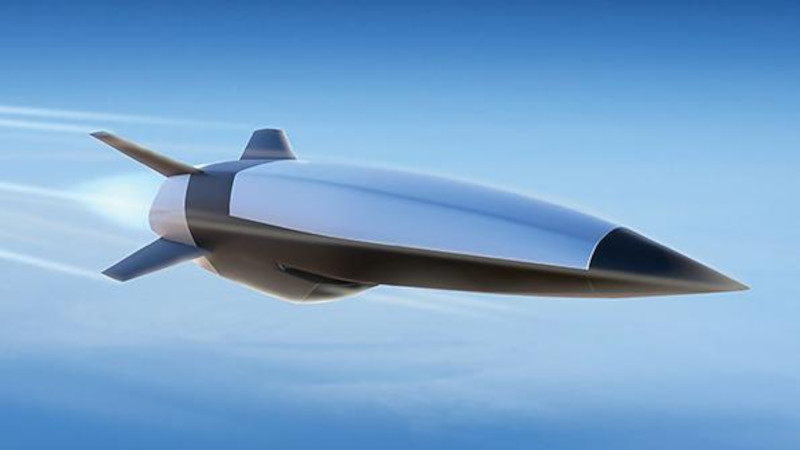
ARRW Hypersonic Missile Program Gets New Funding Despite Signs Of Cancellation


Summary of new US Hypersonic Missile Funding

Here's a summary of the key points from articles on hypersonic missile development in the United States:

1. Funding and Programs:
  •    - The AGM-183A Air-Launched Rapid Response Weapon (ARRW) program received an additional $13.4 million in funding, despite previous signs of cancellation.
  •    - The total ARRW contract value is now $1.32 billion.
  •    - The Pentagon requested $3.8 billion for hypersonics research in fiscal 2022, up from $3.2 billion in 2021.
  •    - Other programs include the Tactical Boost Glide (TBG) and the Southern Cross Integrated Flight Research Experiment (SCIFiRE).

2. ARRW Program Status:
  •    - The Air Force didn't request additional funds for ARRW in the 2025 Fiscal Year budget.
  •    - There are indications that the program might be winding down, but its current status remains unclear.
  •    - The final known end-to-end test was conducted in March 2023 over the Western Pacific.
  • 3. New Developments:
  •    - Raytheon, Boeing, and Lockheed Martin received contracts for the SCIFiRE program to develop an air-launched hypersonic missile.
  •    - Raytheon is also working on the Hypersonic Air-breathing Weapon Concept (HAWC) and Tactical Boost Glide systems.

4. Challenges and Criticisms:
  •    - The ARRW program has had a mixed testing record.
  •    - Some experts question the rush to develop hypersonic weapons, suggesting that their capabilities may be overstated.
  •    - The Union of Concerned Scientists argues that hypersonic weapons offer few meaningful advantages over existing missiles.

5. International Context:
  •    - The U.S. is accelerating hypersonic weapon development in response to testing by Russia and China.
  •    - Russia recently announced a successful test of a Mach 7 hypersonic missile.

6. Future Outlook:
  •    - There's uncertainty about the future of some hypersonic programs, with indications that only the most promising concepts will receive continued funding.
  •    - The Air Force appears to be shifting focus to air-breathing hypersonic cruise missiles.

This summary provides an overview of the current state of U.S. hypersonic missile development, highlighting both progress and challenges in this rapidly evolving field.

ARRW Hypersonic Missile Program Gets New Funding Despite Signs Of Cancellation

twz.com

Joseph Trevithick
Summary
 

Lockheed Martin has received more than $13 million in additional funds for the AGM-183A Air-Launched Rapid Response Weapon (ARRW) hypersonic missile program. The deal could be part of work to wind down the effort, but is also the latest in a string of developments that have raised questions about its current status. The War Zone has already explored signs pointing to a potential follow-on to ARRW, possibly tied in with work on a related program called Tactical Boost Glide (TBG), which may already be occurring in the classified realm.

On September 26, the U.S. Air Force awarded Lockheed Martin’s Missile and Fire Control division a new modification, valued at $13,447,746, to an existing ARRW contact. The contract’s cumulative value increased to $1,319,270,400 as a result. The news came in the Pentagon’s daily contracting notice.

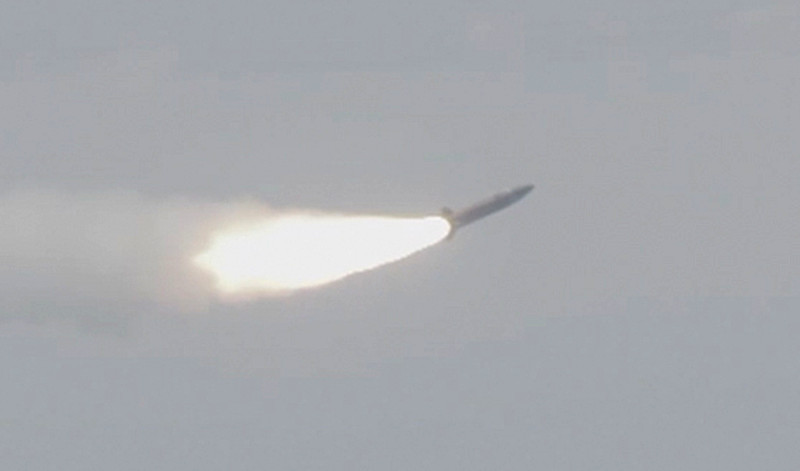
A low-quality image of an ARRW after launch during a previous live-fire flight test. USAF

“Work will be performed in Orlando, Florida, and is expected to be completed by Aug. 31, 2025,” the Pentagon’s notice added. “Fiscal 2023 research, development, test, and evaluation funds in the amount of $13,447,746 are being obligated at the time of award.”

No further details about the work to be performed were included. The War Zone reached out to Lockheed Martin for more information and was directed to contact the Air Force. We have since reached out to the Air Force for more information about this contract and ARRW’s current status, but have not yet received a response.

The Air Force did not request any additional funds for ARRW in its most recent budget request for the 2025 Fiscal Year, which the service rolled out earlier this year.

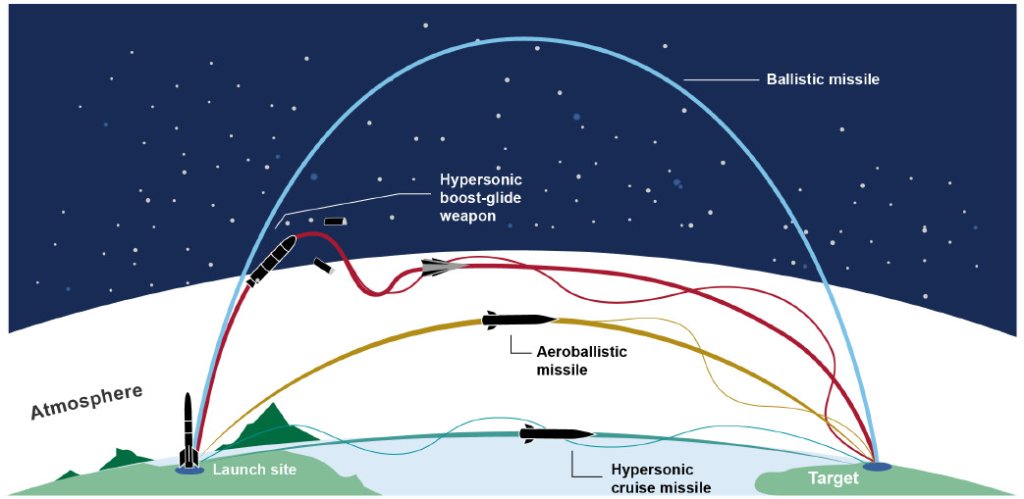
The air-launched ARRW is what is known as a hypersonic boost-glide vehicle weapon. The missile uses a rocket booster to propel an unpowered hypersonic glide vehicle to an optimal speed and altitude and then releases it to glide down along a largely atmospheric flight path to its target. The vehicle travels at hypersonic speed, defined as anything about Mach 5, and is also designed to be able to make erratic movements along the way. The combination of speed and maneuverability makes weapons of this kind difficult to detect in enough time to act, let alone intercept, presenting major complications for defenders.

A graphic showing, in a very rudimentary way, the difference in trajectories between hypersonic boost-glide vehicles, traditional ballistic missiles, quasi or aeroballistic missiles, and air-breathing hypersonic cruise missiles. GAO

For a time, the AGM-183A looked set to become the Air Force’s first operational hypersonic weapon. However, last year, the service had indicated it was looking to close out work on ARRW and to shift focus to air-breathing hypersonic cruise missiles, which function in a completely different manner from hypersonic boost-glide vehicle weapons. The ARRW program had a mixed testing record, at least from what is known publicly.

As noted, it is very possible that the new ARRW funding Lockheed Martin received last month is part of the work now to shut things down.

“ARRW will complete contract closeout, finalize documentation and analysis, and activities to support the leave behind capability,” the Air Force said in its 2025 Fiscal Year budget request. “Testing will enable ARRW to collect valuable data, build capacity and capability, allow hypersonics programs to leverage and build upon each other, and project the overall technology forward.”

In line with this, the Air Force continued with its previously planned flight testing schedule for ARRW even after announcing its intention to pull the plug on the program last year. This culminated with a final end-to-end test, at least that we know of, over the Western Pacific in March of this year. That launch also provided an opportunity for a significant demonstration of capability and show of force aimed particularly at the Chinese government, as The War Zone highlighted at the time and that you read more about here.

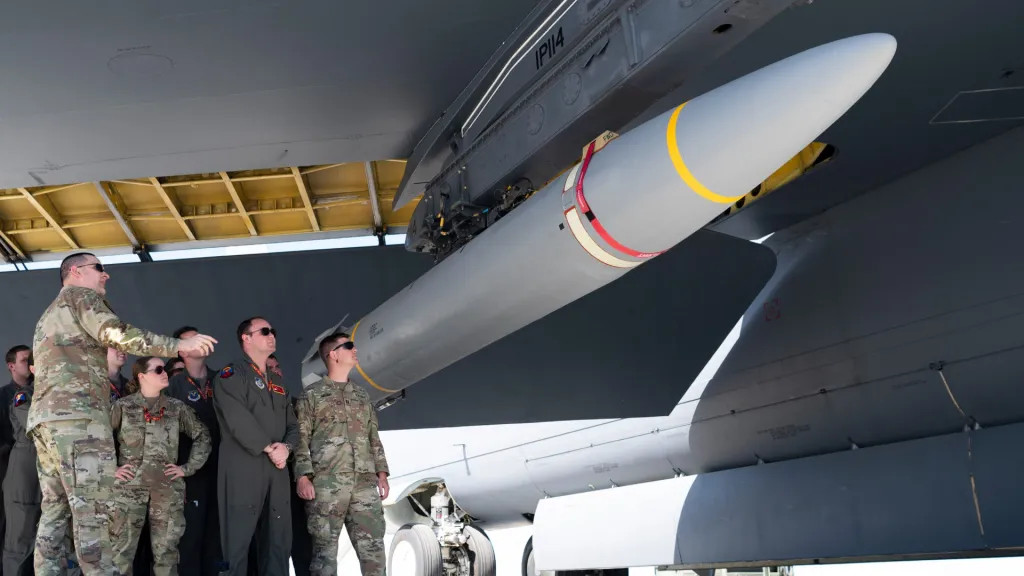
A live AGM-183A ARRW under the wing of a B-52 bomber at Andersen Air Force Base on Guam ahead of a test over the Western Pacific earlier this year. USAF

At the same time, it continues to be unclear whether or not the Air Force is truly through with ARRW and/or whether a direct follow-on program may already be in progress.

“When we’re in the classified session, I can go into a little bit of detail about the differences between those two capabilities, specifically, and then we’ll highlight again what characteristics you need based on the mission set,” Air Force Lt. Gen. Dale White, the Military Deputy at the Office of the Assistant Secretary of the Air Force for Acquisition, Technology, and Logistics told members of the House Armed Services Committee at a hearing in March. White was responding directly to a question about whether his service was more committed to hypersonic cruise missiles than hypersonic boost-glide vehicle designs.

“Let’s just say that there is a plan,” William LaPlante, the Undersecretary of Defense for Acquisition and Sustainment, the Pentagon’s top weapons buyer, had told members of Congress at another hearing back in February. “It’s not something we can talk about in this open [unclassified] session. But we’d like to talk [in a classified setting].”

Similar uncertainty continues to surround TBG, a separate, but related program that the Defense Advanced Research Projects Agency (DARPA) and Air Force run jointly that also involves work on an unpowered hypersonic boost-glide vehicle design. A least one TBG flight test is understood to have occurred, but where or when that was conducted has not been confirmed.

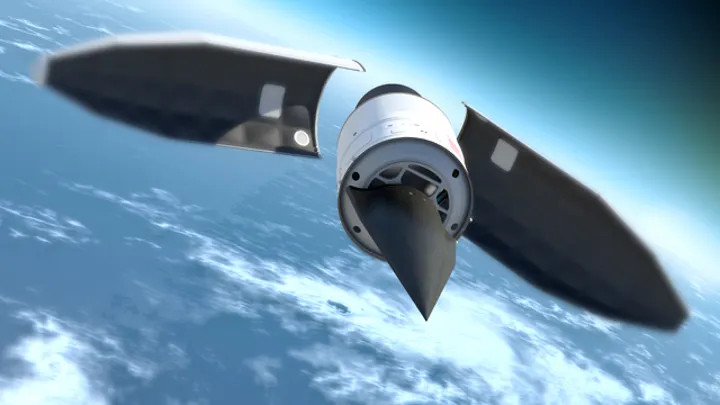
A rendering of DARPA’s Falcon Hypersonic Technology Vehicle 2 (HTV-2) being released. HTV-2 was among several previous hypersonic developments that DARPA said fed into the Tactical Boost Glide (TBG) program. DARPA A rendering of DARPA’s Falcon Hypersonic Technology Vehicle 2 (HTV-2) being released. HTV-2 was among the previous hypersonic developments that DARPA said fed into the Tactical Boost Glide (TBG) program. DARPA

When asked by The War Zone about TBG testing to date back in April, a DARPA spokesperson declined to confirm or deny any tests had occurred or provide any details about their outcomes. They also said they could not provide more information about the program beyond what is on the agency’s website.

“The Tactical Boost Glide (TBG) program is a joint DARPA/U.S. Air Force (USAF) effort that aims to develop and demonstrate technologies to enable future air-launched, tactical-range hypersonic boost glide systems,” according to the TBG program description on DARPA’s website at the time of writing. “TBG is a two-phase effort that plans to include ground and flight testing to mature critical technologies, and aims to demonstrate the system performance achievable through the integration of those technologies. The program is using a disciplined systems engineering approach to define demonstration system objectives and identify enabling technologies needed for future systems.”

TBG was originally presented as a lead-in to ARRW, but the programs ultimately ended up being conducted in parallel. Lockheed Martin, the prime contractor on both programs, has said in the past that ARRW had ultimately pulled ahead in terms of design maturity. The Air Force has also said previously that work done under TBG was incorporated into the development of ARRW.

DARPA had been exploring the potential for turning the TBG system into a sea-launched weapon and there are plans to transition elements of the program to the U.S. Navy in the future, as well. The Navy is pursuing a separate hypersonic boost-glide vehicle weapon with the U.S. Army, which is set to be integrated onto Zumwalt class stealth destroyers and Block IV Virginia class submarines, as well as fired from ground-based launchers. That missile has experienced its own testing troubles.

Separate questions have emerged previously about the Air Force’s plans for its air-breathing Hypersonic Attack Cruise Missile (HACM) program.

“It is early days in the program, and so you certainly hope that a program like HACM is on track at this stage, because it’s quite early. And they typically are, right? And so, I’d say it’s on track but it is a challenging program,” Andrew Hunter, Assistant Secretary of the Air Force for Acquisition, Technology, and Logistics, told DefenseScoop in an interview published in December 2023. “That’s why we’re undertaking a rapid prototyping effort really is to work through some of the potential risks, some of the potential technical risks associated with the HACM concept.”

A rendering Raytheon has previously released in relation to the HACM program. Raytheon

The Air Force, in partnership with the Australian armed forces, is still very publicly moving ahead with HACM. The first test of that missile, which Raytheon is leading the development of, could come as early as this month. Last week, Raytheon also received a new $73 million contract to help lay the groundwork for the production of those weapons. The hope is that HACM will reach at least a limited operational capability in 2027.

Whatever the future might hold now for ARRW, some type of work at least on that program is funded now well into next year.

Contact the author: joe@twz.com


A new hypersonic missile is being developed by Tucson-based Raytheon unit

David Wichner

Tucson-based Raytheon Missiles & Defense has been awarded a new contract to develop an air-launched hypersonic missile, as the Pentagon looks to accelerate development of the ultra-fast weapons in response to recent testing of hypersonics by Russia and China.

In mid-June, the Air Force awarded separate development contracts to Raytheon, Boeing and Lockheed Martin as part of the initial phase of a program known as the Southern Cross Integrated Flight Research Experiment, or SCIFiRE, a cooperative program with Australia to develop hypersonic capabilities.

Raytheon was awarded $33.7 million, while Boeing was awarded $47 million and Lockheed got $33.5 million under the SCIFiRE program, which aims to develop a solid-rocket boosted, air-breathing, hypersonic conventional cruise missile that can be launched from existing fighter or bomber aircraft.

Hypersonic missiles are designed to fly at sustained speeds above Mach 5, or five times the speed of sound, with the ability to maneuver at high speed at altitudes that avoid long-range radars.

People are also reading…

Hypersonic missile testing by China and Russia — which recently announced a successful flight test of a hypersonic missile that flew at Mach 7 — has led to a hypersonic arms race of sorts as the Pentagon rushes to counter development of the hard-to-hit weapons.

Raytheon also is working to develop the Hypersonic Air-breathing Weapon Concept (HAWC) system and the Tactical Boost Glide system for the Air Force and the Defense Advanced Research Projects Agency.

The company also is involved in the Navy’s conventional “prompt strike” hypersonics program and the Army’s long-range hypersonic weapons program, along with other classified hypersonic and counter-hypersonic programs.

Rival Lockheed Martin is developing the Air-Launched Rapid Response Weapon (ARRW), a so-called boost-glide weapon that is propelled to hypersonic speeds on a rocket before separating and gliding towards a target.

Overall for fiscal 2022, the Pentagon has requested $3.8 billion for hypersonics research — up from $3.2 billion in 2021.

But the House Appropriation Committee has proposed cutting requested fiscal 2022 funding of $161 million for the ARRW program by $44 million, citing test delays.

The ARRW program suffered a setback in early April, when the first booster flight test of the weapon system failed to launch from a B-52 bomber off the California coast.

There is wide support for hypersonic missile development in Congress, but only the most promising concepts will win funding, said Loren Thompson, chief operating officer of the Lexington Institute, a Virginia-based policy institute.

“Hypersonics are the flavor of the year at the Pentagon, but it’s not clear all of the programs will go forward,” Thompson said.

Others question the wisdom of fast-tracking hypersonics development.

Some military experts say the hypersonic missile capabilities of Russia and China are likely overstated, citing the difficulty of hypersonic development and their history of touting technical achievements as a propaganda tool.

Meanwhile, the Union of Concerned Scientists recently released a technical analysis concluding that “hypersonic weapons offer few meaningful advantages over existing missiles in terms of speed, maneuverability, accuracy, stealth, or the evasion of missile defenses.”


Why the #Fattah2 #hypersonicmissile won’t give #Iran an upper-hand over #Israel ? - YouTube


Why the #Fattah2 #hypersonicmissile won’t give #Iran an upper-hand over #Israel ? - YouTube

Iran’s Fattah 2 hypersonic missile is being touted as a super weapon. On 1 Oct 2024, the Islamic regime headed by Ali Khamenei fired more than 180 ballistic missiles, including its hypersonic medium-range Fattah-2, in a major offensive aimed at overwhelming Israel’s air defenses. While still unclear, some Fattah 2 seem to have penetrated Israeli air defenses.   Iran revealed Fattah-2’ in November 2023. Hypersonic weapons travel at speeds greater than Mach 5, or more than 3,836 miler per hour. The extreme speed of hypersonic weapons and the ability to fly in unpredictable paths give them a much higher probability of penetrating modern air defenses. Essentially, hypersonic weapons combine the speed of traditional ballistic missiles with the maneuverability of cruise missiles. This type of weapon will be very hard to track and hence difficult to intercept. Several methods are being used to achieve this, which include Scramjet engines, Air-Launched Ballistic missiles as well as Hypersonic Glide Vehicles. Fattah 2 is thought to be a Hypersonic Glide Vehicle type platform possessing a range of 1600 km or 1000 miles. In this video, Defense Updates analyzes why the Fattah 2 hypersonic missile won’t give Iran an upper-hand over Israel ?

Summary 

Here's a summary of the key points from the document:

1. On October 1, 2024, Iran launched over 180 ballistic missiles, including the Fattah-2 hypersonic missile, targeting Israel.

2. The Fattah-2, revealed in November 2023, is believed to be a Hypersonic Glide Vehicle with a range of 1600 km (1000 miles).

3. Hypersonic weapons travel at speeds greater than Mach 5 and are difficult to intercept due to their speed and unpredictable flight paths.

4. Russia's Kinzhal hypersonic missile, previously thought invincible, was successfully intercepted by a U.S.-made Patriot air defense system in Ukraine on May 4, 2023.

5. Israel has a multi-layered air defense system, including Arrow variants, David's Sling, Patriot, and Iron Dome.

6. The Fattah-2's 200 kg warhead may not be sufficient to destroy fortified military targets.

7. Iran is reportedly close to developing nuclear weapons, but miniaturizing them for missile delivery remains a challenge.

8. Iran's air force consists mostly of older generation aircraft.

9. Saudi Arabia and U.S. naval assets in the region could potentially intercept Iranian missiles before they reach Israel.

10. The document suggests that Iran's ability to overwhelm Israel's defenses with the Fattah-2 may be limited due to production constraints, interception possibilities, and Israel's advanced air defense capabilities.

Chapters: 

 00:11 INTRODUCTION 
 02:27 HYPERSONIC WEAPONS HAVE BEEN INTERCEPTED 
 04:44 SMALL NON-NUCLEAR WARHEAD HAS LIMITED DESTRUCTIVE CAPABILITIES  
 06:41 SERIAL PRODUCTION WOULD BE LIMITED 
 
 🐦 Follow us on Twitter :   / defense_updates   
▶️ Narration by Scott Leffler (scottleffler.com) 
🎵 Background Music courtesy of incompetech.com "Giant Wyrm" Kevin MacLeod (Licensed under Creative Commons)

Saturday, October 12, 2024

General Atomics Releases FUSE: A Powerful Tool to Fast-Track the Development of Fusion Power Plants | General Atomics


General Atomics Releases FUSE: A Powerful Tool to Fast-Track the Development of Fusion Power Plants | General Atomics

Summary

key points about General Atomics FUSE:

1. General Atomics has released FUSE (Fusion Synthesis Engine), an open-source software tool designed to accelerate the development of fusion power plants. Released in October 2024, FUSE integrates plasma physics, engineering, and cost analysis into one system.

2. FUSE aims to enable more effective collaboration on fusion energy projects by allowing researchers to easily install and run the program on their own systems. It uses machine learning to speed up simulations and improve plant designs.

3. The software is written in Julia and is available under the Apache 2.0 license, allowing free usage, modification, and commercialization.

4. Fusion energy is seen as a potential source of clean, virtually limitless energy. It works by fusing light atomic nuclei together, releasing large amounts of energy in the process.

5. The DIII-D National Fusion Facility, operated by General Atomics, is the largest magnetic fusion facility in the U.S. It has made significant contributions to fusion research and serves as a hub for the U.S. and international scientific communities.

6. The ITER project, an international collaboration to build the world's largest fusion experiment, is over two-thirds complete as of 2024. The U.S. is a key partner in ITER, contributing several critical components.

7. General Atomics is fabricating the Central Solenoid for ITER, which will be the world's largest pulsed superconducting magnet.

8. Fusion research has led to various spinoff technologies in fields such as aircraft carriers, computing, jet engines, and spacecraft propulsion.

9. There are ongoing efforts to attract diverse talent to fusion research and provide educational opportunities for students interested in the field.

10. As of 2024, fusion energy is seen as a promising technology for clean energy production in the latter half of the 21st century, with increased investment needed to keep the U.S. at the forefront of development.

New Open-Source Software Aims to Drive Fusion Innovation for a Clean Energy Future

SAN DIEGO, Oct. 08, 2024 - Scientists and researchers have long hailed fusion, the process that powers the sun, as a clean and virtually limitless energy source they can harness on earth. This month, General Atomics (GA) took a big step towards achieving this goal by releasing the Fusion Synthesis Engine (FUSE)—a state-of-the-art, open-source software designed to help build fusion power plants.

Created by GA, the software is now accessible to anyone under the Apache 2.0 license, guaranteeing its free usage, modification, and commercialization. Written in “Julia”, a popular programming language, FUSE combines key elements needed to develop fusion power—such as plasma physics, engineering, and cost analysis—into one easy-to-use system. GA developers explained that other researchers can easily install and run the program on their own systems, enabling more effective collaboration on fusion energy projects. This approach helps reduce costs and makes it easier to achieve the goal of fusion energy.

“Releasing FUSE is a bold and exciting step that offers a powerful tool to the entire fusion community,” said Wayne Solomon, vice president of Magnetic Fusion Energy for the General Atomics Energy Group. "This platform encourages teamwork and new ideas while fulfilling GA’s commitment to openness and progress. By making FUSE available to everyone, we’re not just advancing our own developments—we’re giving others the ability to build on it, with the goal of accelerating discoveries throughout the entire field."

By integrating various complex models, researchers can generate simulations that are both faster and more accurate, including how a fusion plant operates in both steady and dynamic conditions.

“FUSE could have a big impact on the future of fusion energy,” said Orso Meneghini, a theory and computational science manager for the General Atomics Energy Group. “One of its strengths is that it uses machine learning to speed up simulations, making it useful for improving plant designs and reducing uncertainties. Overall, Fuse’s flexibility and generality make it an important tool for advancing research in this critical area of energy research.”

Fusion is the same process that powers the sun. Unlike current nuclear power, which splits atoms, fusion fuses them together, creating intense heat that can generate electricity. Researchers believe this high-tech method could lead to almost unlimited sustainable energy to meet humanity’s future needs.

For decades, General Atomics has been a leader in fusion technology research. At its San Diego headquarters, GA scientists and engineers work with teams across the country and the world to explore the science needed to make fusion power plants a reality. GA also operates the DIII-D National Fusion Facility, a Department of Energy user facility that houses the only operating fusion reactor (tokamak) in the U.S., where scientists collaborate to find the best solutions for bringing fusion power to market.

For more information and full documentation about FUSE, visit https://fuse.help. And to learn more about GA’s work in researching fusion technology, go to ga.com/magnetic-fusion/promise-of-fusion.

About General Atomics
Since the dawn of the atomic age, General Atomics innovations have advanced the state of the art across the full spectrum of science and technology – from nuclear energy and defense to medicine and high-performance computing. Behind a talented global team of scientists, engineers, and professionals, GA’s unique experience and capabilities continue to deliver safe, sustainable, economical, and innovative solutions to meet growing global demands.

Contact:
Andrew James
Communications Lead, General Atomics
858-287-2636
andrew.james@ga.com


Main · FUSE


FUSE.jl

FUSE (FUsion Synthesis Engine) is an open-source framework for the integrated design of Fusion Power Plants (FPP). Originally developed by General Atomics, FUSE is now publicly available under the Apache 2.0 license.

📢 Upcoming 2024 Code Camp 📢

Join the FUSE community and help shape the future of Fusion Power Plant design:

  • Date: Dec 9th - 13th
  • Location: In person @ General Atomics
  • Seats: Limited to 40 participants - 🔥 REGISTER TODAY!

Resources

Here are some key resources for getting started with FUSE:

Objectives

FUSE aims to achieve the following objectives:

  • ⚡ Provide a highly efficient, modular framework that tightly couples models across different domains.
  • 🧩 Integrate plasma physics, engineering, control, balance of plant, and costing systems.
  • 🤖 Leverage machine learning to overcome the typical fidelity/speed tradeoff in simulations.
  • ⏱️ Support both stationary and time-dependent simulations.
  • 💻 Harness parallelism and high-performance computing (HPC) for large-scale studies.
  • 🎯 Perform multi-objective constrained optimization to explore design tradeoffs.
  • 🔍 Enable comprehensive sensitivity analysis and uncertainty quantification.

Basic Concepts

FUSE is entirely written in Julia and is structured around the following core concepts:

  1. 📂 Data storage: All data is stored in the dd structure, which follows the ITER IMAS ontology.
  2. 🧠 Actors: The core components of FUSE simulations are physics and engineering actors.
  3. 🕹️ Control: Actor functionality is governed by act parameters.
  4. 🚀 Initialization: The data structure can be initialized from 0D ini parameters.
  5. 🔧 Use cases: FUSE includes templates for various machines (e.g., FPP, ITER, ARC).
  6. 🔄 Workflows: Self-contained studies and optimizations are conducted via workflows, typically involving multiple FUSE simulations.
  7. 🌍 Interoperability: FUSE interfaces with existing modeling tools like OMFIT/OMAS and the IMAS ecosystem.

A diagram illustrating these concepts is provided below: FUSE Diagram

Usage Example

Here’s a simple example of setting up and running a FUSE simulation in Julia:

using FUSE

# Obtain `ini` and `act` parameters for a specific use case
ini, act = FUSE.case_parameters(:FPP)

# Initialize the `dd` structure with 0D parameters
dd = FUSE.init(ini, act)

# Run a stationary plasma actor simulation
FUSE.ActorStationaryPlasma(dd, act)

# Get an overview of the simulation results
FUSE.digest(dd)

Installation

FUSE and its related packages are available through the FuseRegistry. To install:

  1. Install Julia

  2. Add the FuseRegistry and General registries, then install FUSE:

using Pkg
Pkg.Registry.add(RegistrySpec(url="https://github.com/ProjectTorreyPines/FuseRegistry.jl.git"))
Pkg.Registry.add("General")
Pkg.add("FUSE")

Citation

Please cite this work as follows:

@article{meneghini2024fuse,
author = {Meneghini, O. and Slendebroek, T. and Lyons, B.C. and McLaughlin, K. and McClenaghan, J. and Stagner, L. and Harvey, J. and Neiser, T.F. and Ghiozzi, A. and Dose, G. and Guterl, J. and Zalzali, A. and Cote, T. and Shi, N. and Weisberg, D. and Smith, S.P. and Grierson, B.A. and Candy, J.},
doi = {10.48550/arXiv.2409.05894},
journal = {arXiv},
title = {{FUSE (Fusion Synthesis Engine): A Next Generation Framework for Integrated Design of Fusion Pilot Plants}},
year = {2024}
}

Last update on 2024-10-12T03:39:11.397


FUSE (Fusion Synthesis Engine): A Next Generation Framework for Integrated Design of Fusion Pilot Plants

The Fusion Synthesis Engine (FUSE) is a state-of-the-art software suite designed to revolutionize fusion power plant design. FUSE integrates first-principle models, machine learning, and reduced models into a unified framework, enabling comprehensive simulations that go beyond traditional 0D systems studies. FUSE's modular structure supports a hierarchy of model fidelities, from steady-state to time-dependent simulations, allowing for both pre-conceptual design and operational scenario development. This framework accelerates the design process by enabling self-consistent solutions across physics, engineering, and control systems, minimizing the need for iterative expert evaluations. Leveraging modern software practices and parallel computing, FUSE also provides multi-objective optimization, balancing cost, efficiency, and operational constraints. Developed in Julia, FUSE is fully open-source under the Apache 2.0 license, promoting transparency and collaboration within the fusion research community.
Subjects: Plasma Physics (physics.plasm-ph)
Cite as: arXiv:2409.05894 [physics.plasm-ph]
  (or arXiv:2409.05894v1 [physics.plasm-ph] for this version)
  https://doi.org/10.48550/arXiv.2409.05894

Submission history

From: Orso Meneghini [view email]
[v1] Mon, 2 Sep 2024 19:15:29 UTC (23,115 KB)


Thursday, October 3, 2024

One Ping Please - How to Use Sonar in Sea Power Naval Combat in the Missile Age - YouTube


One Ping Please - How to Use Sonar in Sea Power Naval Combat in the Missile Age - YouTube

A definitive Sonar guide for Sea Power Naval Combat in the Missile Age. Watching this vieo should allow you to be ready to conduct any anti-submarine warfare (ASW) in the game. Wishlist Sea Power here: https://store.steampowered.com/app/12... 

 ►Discord:   / discord   

►Patreon:   / enigma89   

►Merch: https://enigma-72.creator-spring.com/ 

 Chapters

  •  00:00 Intro  
  • 00:29 What is Sonar 
  •  02:17 Sonar Modeling and Passive Sonar 
  •  03:42 Active Sonar Behaviour 
  •  06:31 How to Employ Active Sonar  
  • 12:16 Towed Arrays Convergence and Sprint and Drift 
  •  15:05 Closing Thoughts 
  •  15:33 Outro 

Graphics Credit: Graphics and animations were made by JetfireBlack Outro Music: Epidemic Sounds Vivaldi_ The Four Seasons, Violin Concerto in F Minor, Op. 8 No. 4, RV 297 Winter_ II. Largo - Michelle Ross Patreon 

Shoutout to my most major patreon supporters who helps makes these videos possible: RS Hart Squidder Brother Nineball Kolovar Charlie Text Block for Algo: enigma,enigma89,Sea Power,Sea Power Game,sea power naval combat in the missile age,Sea Power Sonar,Sea Power Guide,Sea Power How To,Sea Power Sonar Guide,Sea Power ASW,Sea Power ASW Guide,Sea Power Anti-Submarine Warfare guide,Sea Power anti submarine warfare,sea power sonar,sea power sonar how to,sea power naval combat in the missile age sonar,sea power active sonar,sea power ping,sea power sonar ping,naval sim,naval simulator 

This channel focuses on combat flight simulators like DCS World, IL-2 Korea, IL-2 Great Battles, Combat Pilot and War Thunder. If you play either of these games or flight simulators like Microsoft Flight Simulator 2020 / FS2024 and enjoy aviation and dogfighting then this channel is for you. Even if you are coming from milsim or non combat flight simulators like U-Boat or GHPC, you should be able to enjoy this channel. I play using TrackIR5 and do not use VR, this means that I am able to capture footage for tutorials, how-to-guides and other multiplayer tips and tricks video in 1440p. Eagle Dynamics has made it easier than ever to learn DCS because the game is technically free. 

The game has the F-15, F-16, Su-27, Mig-29, Mig-21, Mig-19, Mig-15, F-86 Sabre, Jf-17, Mirage 2000, F-18 Hornet and F-14 Tomcat. There are soon other modules coming such as the Mig-23 and F-4. Lastly, there are helicopters like the Mi-24 Hind and AH-64 Apache. The same is also true for IL-2 Great Battles. With Battle of Stalingrad, Battle of Kuban, Battle of Bodenplatte, Battle of Moscow and Battle of Normandy being released, there is an immense amount of variety covered. The Bf-109, Fw-190, P-51, Tempest, P-47, Mc.202, Stuka, Ju-88, He-111, and so on are all in the game. I focus on making videos to make that part accessible so you can dive into IL-2 Multiplayer.

Summary

One of the best naval ASW games out there. Best I've seen since Harpoon. Summary of Sonar in Sea Power:

1. Sonar basics:
   - Used to detect objects underwater by emitting sound pulses and measuring reflections
   - Sea Power models sonar realistically but with some simplifications for gameplay

2. Types of sonar:
   - Passive sonar: Listens for sounds from other vessels
   - Active sonar: Emits pings and listens for reflections

3. Sonar modeling in Sea Power:
   - Accounts for environmental factors like thermal layers, sea state, and rain
   - Sonar paths bend and can create shadow zones where detection is impossible
   - Thermal layers affect sonar propagation

4. Sonar systems in the game:
   - Submarine sonar: Directional, can operate above/below thermal layer
   - Ship hull-mounted sonar: Wider field of view, but only above thermal layer
   - Variable Depth Sonar (VDS): Deployable, can operate at different depths
   - Helicopter-deployed sonobuoys: Multiple can be used for triangulation
   - Dipping sonars: Deployed from helicopters
   - Active sonar torpedoes: Search and engage targets autonomously

5. Additional detection methods:
   - MAD (Magnetic Anomaly Detector) on helicopters
   - Towed array sonar for enhanced passive listening

6. Advanced concepts:
   - Sonar convergence zones at 30 and 60 nautical miles
   - Tactics for hiding from sonar (noise management, aspect control)
   - "Sprint and drift" tactic for balancing movement and detection

The video aims to provide a comprehensive overview of sonar mechanics in Sea Power, balancing realism with gameplay considerations.

Synthetic Aperture Radar Drone Gets Interferometric Imaging | Hackaday

Synthetic Aperture Radar Drone Gets Interferometric Imaging | Hackaday Backyard Coherence: A €1,000 Drone SAR Achieves Repeat-Pass Interfero...